
Wyclef Jean & Carlos Santana Join Bang & Olufsen’s Living Room Tour
Wyclef Jean & Carlos Santana Join Bang & Olufsen’s Living Room Tour
This December Bang & Olufsen presents a rare and exclusive insight into the music and mind of guitar legend Carlos Santana.
NEW YORK, LOS ANGELES, COPENHAGEN and STRUER, Denmark, Dec. 9, 2014 /PRNewswire-HISPANIC PR WIRE/ — In 2013, the first instalment of Bang & Olufsen’s Living Room Tour featured an interview hosted by Zane Lowe and a live performance in London with the honourable Paul McCartney, which was launched via its website to music lovers all over the world.
Now the Living Room Tour is back on the road with a new and soulful session. Grammy Award-winning artist and producer Wyclef Jean will be hosting a musical journey with Carlos Santana and his beloved guitar, one of the most recognizable sounds in popular culture. The first installment is set for release on December 9th, with more videos to come throughout December and January; those videos can be found here.
Bang & Olufsen’s Living Room Tour offers music lovers and audio aficionados all over the world rare and intimate access to exceptional musical talent and reflections on natural sound from iconic names in the industry. The sessions include exclusive performances and behind-the-scenes footage made available across Bang & Olufsen’s blog as well as Facebook and Twitter.
“We are truly excited about working with Carlos Santana on the latest edition of The Living Room Tour. It is a collaboration that connects music fans all over the world with spectacular artists who share our passion for great sound and unrivalled craftsmanship. The intimate sessions at the same time prove to be an enriching journey into new genres and musical heritages for Bang & Olufsen,” states Marie Schmidt, VP Brand, Design & Marketing at Bang & Olufsen.
“The Living Room Tour is all about sitting in with the artist, sharing stories and engaging in an informal ‘jam session’. Carlos Santana is a legend; he transcends musical genres – so watch out for this new episode of The Living Room Tour. It is going to be epic, it is going to be exciting!” says Jean.
Photos from the session can be found here.
Bang & Olufsen was founded in Struer, Denmark, in 1925 by Peter Bang and Svend Olufsen, two innovative, young engineers devoted to high quality audio reproduction. Since then, the brand has become an icon of performance and design excellence through its long-standing craftsmanship tradition and the strongest possible commitment to high-tech research and development.
Still at the forefront of domestic technology, Bang & Olufsen has extended its comprehensive experience with integrated audio and video solutions for the home to other areas such as the hospitality and automotive industries in recent years. Consequently, its current product range epitomizes seamless media experiences in the home as well as in the car and on the move.
For more information on Bang & Olufsen, please visit www.bang-olufsen.com.
Images are available free of charge from the Bang & Olufsen media centre:
http://mediacenter.bang-olufsen.dk.
U2 The iNNOCENCE + eXPERIENCE Tour 2015 A Triumph In Ticket Sales!
U2 The iNNOCENCE + eXPERIENCE Tour 2015 A Triumph In Ticket Sales!
Due To Overwhelming Demand – Additional Dates Confirmed in
New York, Chicago, Boston, Montreal, Amsterdam, Stockholm, Berlin & Paris
Tickets on sale Dec. 15 at Livenation.com
LOS ANGELES, Dec. 9, 2014 /PRNewswire-HISPANIC PR WIRE/ — A triumph in ticket sales, U2’s iNNOCENCE + eXPERIENCE Tour 2015 is sold out in every city where it went on sale this morning, it was announced by Live Nation. Following overwhelming fan demand, including a record-setting 118,000 fans queuing online to purchase tickets in New York, two new shows have been confirmed in New York, Chicago, Boston, Montreal, Amsterdam, Stockholm, Berlin & Paris. Tickets for the new dates will go on sale Monday, Dec. 15. A complete tour itinerary is below.
Photo – http://photos.prnewswire.com/prnh/20141209/163081
“We are going to try to have a completely different feeling from night one to night two,” said Bono, “and have some fun playing with the idea of innocence and experience. More to be revealed!”
“The sales for The iNNOCENCE + eXPERIENCE Tour have been brilliant and we are working to satisfy the incredible demand,” said Arthur Fogel, President – Global Touring and Chairman – Global Music.
The tour follows the recent release of U2’s thirteenth studio album Songs Of Innocence by Island Records, which was given to U2.com subscribers and gifted by Apple to over half a billion iTunes Music Store customers worldwide. To date, Songs of Innocence has been streamed 81 million times and has been downloaded by 30 million fans.
Tickets for the additional U2 iNNOCENCE + eXPERIENCE Tour 2015 shows will go on general sale Monday, Dec. 15. U2.com subscribers who have not already utilized their code and new members may access tickets at U2.com from Wednesday, Dec. 10 at 10 a.m. through Friday, Dec. 12 at noon (all times local). Tickets will be general admission on the floor and reserved seating in the stands.
U2 iNNOCENCE + eXPERIENCE Tour 2015 is produced by Live Nation Global Touring. UPS is the Official Logistics Provider of the tour.
|
iNNOCENCE + eXPERIENCE |
|||
|
TOUR ITINERARY |
|||
|
DATE |
CITY |
VENUE |
ON-SALE |
|
NORTH AMERICA 2015 |
|||
|
May 14 |
Vancouver, BC |
Rogers Arena |
|
|
May 15 |
Vancouver, BC |
Rogers Arena |
|
|
May 18 |
San Jose, CA |
SAP Center at San Jose |
|
|
May 19 |
San Jose, CA |
SAP Center at San Jose |
|
|
May 22 |
Phoenix, AZ |
US Airways Center |
|
|
May 23 |
Phoenix, AZ |
US Airways Center |
|
|
May 26 |
Los Angeles, CA |
Forum |
|
|
May 27 |
Los Angeles, CA |
Forum |
|
|
May 30 |
Los Angeles, CA |
Forum |
|
|
May 31 |
Los Angeles, CA |
Forum |
|
|
June 12 |
Montreal, QC |
Bell Centre |
SOLD OUT |
|
June 13 |
Montreal, QC |
Bell Centre |
SOLD OUT |
|
June 16 |
Montreal, QC |
Bell Centre |
On sale Dec. 15 |
|
June 17 |
Montreal, QC |
Bell Centre |
On sale Dec. 15 |
|
June 24 |
Chicago, IL |
United Center |
SOLD OUT |
|
June 25 |
Chicago, IL |
United Center |
SOLD OUT |
|
June 28 |
Chicago, IL |
United Center |
On sale Dec. 15 |
|
June 29 |
Chicago, IL |
United Center |
On sale Dec. 15 |
|
July 6 |
Toronto, ON |
Air Canada Centre |
SOLD OUT |
|
July 7 |
Toronto, ON |
Air Canada Centre |
SOLD OUT |
|
July 10 |
Boston, MA |
TD Garden |
SOLD OUT |
|
July 11 |
Boston, MA |
TD Garden |
SOLD OUT |
|
July 14 |
Boston, MA |
TD Garden |
On sale Dec. 15 |
|
July 15 |
Boston, MA |
TD Garden |
On sale Dec. 15 |
|
July 18 |
New York, NY |
Madison Square Garden |
SOLD OUT |
|
July 19 |
New York, NY |
Madison Square Garden |
SOLD OUT |
|
July 22 |
New York, NY |
Madison Square Garden |
SOLD OUT |
|
July 23 |
New York, NY |
Madison Square Garden |
SOLD OUT |
|
July 26 |
New York, NY |
Madison Square Garden |
On sale Dec. 15 |
|
July 27 |
New York, NY |
Madison Square Garden |
On sale Dec. 15 |
|
EUROPE / UK 2015 |
|||
|
Sept. 4 |
Turin, Italy |
Pala Alpitour |
SOLD OUT |
|
Sept. 5 |
Turin, Italy |
Pala Alpitour |
SOLD OUT |
|
Sept. 8 |
Amsterdam, The Netherlands |
Ziggo Dome |
SOLD OUT |
|
Sept. 9 |
Amsterdam, The Netherlands |
Ziggo Dome |
SOLD OUT |
|
Sept. 12 |
Amsterdam, The Netherlands |
Ziggo Dome |
On sale Dec. 15 |
|
Sept. 13 |
Amsterdam, The Netherlands |
Ziggo Dome |
On sale Dec. 15 |
|
Sept. 16 |
Stockholm, Sweden |
Globe |
SOLD OUT |
|
Sept. 17 |
Stockholm, Sweden |
Globe |
SOLD OUT |
|
Sept. 20 |
Stockholm, Sweden |
Globe |
On sale Dec. 15 |
|
Sept. 21 |
Stockholm, Sweden |
Globe |
On sale Dec. 15 |
|
Sept. 24 |
Berlin, Germany |
O2 World |
SOLD OUT |
|
Sept. 25 |
Berlin, Germany |
O2 World |
SOLD OUT |
|
Sept. 28 |
Berlin, Germany |
O2 World |
On sale Dec. 15 |
|
Sept. 29 |
Berlin, Germany |
O2 World |
On sale Dec. 15 |
|
Oct. 5 |
Barcelona, Spain |
Palau Sant Jordi |
On sale Dec. 9 |
|
Oct. 6 |
Barcelona, Spain |
Palau Sant Jordi |
On sale Dec. 9 |
|
Oct. 13 |
Antwerp, Belgium |
Sportpaleis |
SOLD OUT |
|
Oct. 14 |
Antwerp, Belgium |
Sportpaleis |
SOLD OUT |
|
Oct. 17 |
Koln, Germany |
Lanxess Arena |
SOLD OUT |
|
Oct. 18 |
Koln, Germany |
Lanxess Arena |
SOLD OUT |
|
Oct. 25 |
London, UK |
The O2 |
SOLD OUT |
|
Oct. 26 |
London, UK |
The O2 |
SOLD OUT |
|
Oct. 29 |
London, UK |
The O2 |
SOLD OUT |
|
Oct. 30 |
London, UK |
The O2 |
SOLD OUT |
|
Nov. 6 |
Glasgow, UK |
The SSE Hydro |
SOLD OUT |
|
Nov. 7 |
Glasgow, UK |
The SSE Hydro |
SOLD OUT |
|
Nov. 10 |
Paris, France |
Bercy |
SOLD OUT |
|
Nov. 11 |
Paris, France |
Bercy |
SOLD OUT |
|
Nov. 14 |
Paris, France |
Bercy |
On sale Dec. 15 |
|
Nov. 15 |
Paris, France |
Bercy |
On sale Dec. 15 |
Itinerary subject to change.
For complete tour and ticket information, visit: www.u2.com & www.livenation.com
Press materials available at: www.u2.com/rmpphoto
About Live Nation Entertainment
Live Nation Entertainment (NYSE: LYV) is the world’s leading live entertainment company comprised of global market leaders: Ticketmaster, Live Nation Concerts, Live Nation Media & Sponsorship and Artist Nation Management. For additional information, visit www.livenationentertainment.com.
Follow us @twitter.com/LiveNationInc
About UPS
UPS (NYSE: UPS) is a global leader in logistics, offering a broad range of solutions including the transportation of packages and freight; the facilitation of international trade, and the deployment of advanced technology to more efficiently manage the world of business. Headquartered in Atlanta, UPS serves more than 220 countries and territories worldwide. The company can be found on the Web at ups.com® and its corporate blog can be found at Longitudes.ups.com. To get UPS news direct, visit pressroom.ups.com/RSS.
Final Leg of 2014 Honda Civic Tour featuring 3BallMTY is Underway

Final Leg of 2014 Honda Civic Tour featuring 3BallMTY is Underway
Latin DJ Trio Releases New Single,
“De Las 12 A Las 12” (“From 12 To 12”)
Tickets available at
www.HondaCivicTour.com
TORRANCE, Calif., Dec. 8, 2014 /PRNewswire-HISPANIC PR WIRE/ — The third and final leg of the highly anticipated 2014 Honda Civic Tour featuring Latin DJ trio 3BallMTY is now underway, with upcoming performances in major markets including New York, Chicago, Denver and Los Angeles. With their innovative fusion of electronic and traditional Mexican music, 3BallMTY (pronounced: Tribal Monterrey) are the first-ever Latin music act to perform on the Honda Civic Tour. Bilingual hip-hop group Los Rakas will be special guests on all dates. Tickets are available at www.HondaCivicTour.com.
To view the multimedia assets associated with this release, please click http://www.multivu.com/players/English/7231531-honda-stage-music-news/

“The interaction with the crowds at theses shows has been amazing. Arizona and Dallas were great and we can’t wait to see what is ahead. We know that fans around the world have come to love our music because of our innovative sound and we are grateful to have the opportunity to bring our music to cities all over the U.S. on the Honda Civic Tour,” said DJ Otto.
3BallMTY’s brand new single, “De Las 12 A Las 12” (“From 12 to 12”) is the latest track from their most recent album, Globall, which showcases an incredible list of collaborations with artists including Becky G, Far East Movement, The Cumbia Girls and Belinda. The new song, along with a set list of international hit singles that have led the trio to revolutionize Latin music and distinguish their unique sound, including “Intentalo” (“Try It”) and “La Noche Es Tuya” (“The Night Is Yours”), will be crowd favorites during the Honda Civic Tour.
In staying true to annual tradition, all of this year’s Honda Civic Tour headliners have created their own customized Honda Civic vehicles, each showcasing the individual band’s style. Offering a nod to the fashion styles of dance music in Mexico, 3BallMTY‘s design showcases swoop imagery and utilizes diamonds to signify the deep roots of cultural music transformed to modern, electronic sounds.
Fans still have an opportunity to enter to win the 3BallMTY custom-designed and autographed Honda Civic Coupe EX-L, as well as a 2015 Honda CBR300R motorcycle with 3BallMTY’s signature design. During the 2014 Honda Civic Tour Sweepstakes, grand prizes have included custom-designed and autographed Honda Civic Coupe EX-Ls from each of the headlining artists. First prizes have included a customized 2014 Honda Ruckus scooter co-designed by Grouplove and Portugal. The Man and a customized 2014 Honda Grom motorcycle with a custom design from American Authors. Second prizes included three amazing flyaway trips to join the Honda Civic Tour at designated stops, including Honda Civic Tour featuring Grouplove and Portugal. The Man at Rumsey Field (Central Park) in New York City, American Authors at Paradise Rock Club in Boston and 3BallMTY at The Regent in Los Angeles. Each trip included flights and hotel for a 3-day, 2-night stay for the winner and a guest, along with premiere tickets for the show. Fans can visit http://Honda.us/CivicTourSweepsRules for online entry, additional eligibility restrictions, prize descriptions and full official rules.
Now in its 13th year, Honda Civic Tour is not one, but three successive tours in 2014, highlighting three distinct genres of music, that also serve as a significant pillar of the new Honda Stage music platform. Alternative rock bands Grouplove and Portugal. The Man co-headlined the first 2014 Honda Civic Tour this summer with Tokyo Police Club and Typhoon supporting on various dates. Brooklyn-based pop rock band American Authors headlined the second leg with support from The Mowgli’s, Echosmith and Oh Honey, with U.S. dates wrapping in early November.
Honda’s commitment to music runs deep, with a 13-year history presenting the popular Honda Civic Tour, as well as hosting Honda Stages at premier U.S. music festivals including Governors Ball, Music Midtown and Austin City Limits Music Festival. Honda’s passion for music content curation and delivering unique experiences to music enthusiasts has led the automaker’s development of the new Honda Stage platform. The Honda Stage program provides music fans one-of-a-kind music experiences through live performances and digital content: www.YouTube.com/HondaStage.
Under the Honda Stage program, American Honda brings together an unprecedented group of entertainment and technology leaders to produce and distribute some of the best original, high-quality music content available today, through dozens of live events and exclusive online content. The success of the Honda Civic Tour makes it a natural fit as a pillar of the Honda Stage program.
Honda Civic Tour featuring 3BallMTY and Los Rakas:
|
Dec 11 |
Baltimore, MD |
The Fillmore |
|
Dec 12 |
New York, NY |
El Patron NYC |
|
Dec 14 |
Chicago, IL |
Portage Theater |
|
Dec 16 |
Denver, CO |
Larimer Lounge |
|
Dec 17 |
Las Vegas, NV |
Rubicon Night Club |
|
Dec 18 |
Santa Ana, CA |
Observatory |
|
Dec 19 |
Los Angeles, CA |
The Regent |
|
Dec 20 |
Ventura, CA |
Ventura Theater |
|
Dec 21 |
San Francisco, CA |
The Fillmore |
About 3BallMTY
3BallMTY (pronounced: Tribal Monterrey) is Erick Rincon, DJ Otto, and Sheeqo Beat – they are a cultural phenomenon and an award-winning electronic Latin music group from Monterrey, Mexico that received the Best New Artist award at the Latin Grammys. These young artists specialize in electronic mixes that combine cumbia and tropical music with pre-Hispanic influenced musical textures. As one of the most important and authentic representatives of “La Generacion Tribal” or “tribal generation,” 3BallMTY has broken cultural, generational and language barriers. Their first album Intentalo reached great success within a year of its release by going Gold in Mexico and Platinum in the U.S. and Central America. The group is critically acclaimed by Rolling Stone, Billboard Magazine and the New York Times. In 2012, iTunes selected them for “Best Latin Breakthrough Album.” The group has won numerous other awards since and is a force of young talent heading into the music mainstream across the U.S. with their newest release, Globall. http://www.3ballmty.com.mx
About Honda Civic Tour
Produced by Marketing Factory, Honda Civic Tour brings innovation to the masses by combining automotive technology and contemporary music. With almost three million concert event attendees since 2001, Civic Tour has established itself as one of the nation’s most compelling, successful music concert tour franchises. Civic Tour has provided concert-goers with an exclusive, interactive concert experience featuring up-close and personal access to their favorite bands, including Linkin Park, blink-182, My Chemical Romance, Paramore, The Black Eyed Peas, Fall Out Boy, Everclear, Incubus, Good Charlotte, New Found Glory, Dashboard Confessional, Maroon 5, and Panic! at the Disco. http://www.HondaCivicTour.com
About Honda Civic:
One of the best-selling compact cars in the United States, the Civic features a lineup of six distinct models: the conventional gasoline-powered Civic Sedan and Civic Coupe, two high-performance Civic Si models, the gasoline-electric Civic Hybrid, the Civic Natural Gas and Civic HF high fuel economy model. The Civic lineup embodies the Honda brand values of ‘clean, safe and fun’ with the Civic HF achieving an EPA- estimated fuel economy rating of 41 mpg on the highway. The Civic Hybrid’s EPA- estimated fuel economy rating is 44/47/45 city/highway/combined. The Civic Sedan has earned top safety ratings from NHTSA and was the first small car to earn a ‘TOP SAFETY PICK+’ designation from IIHS. Now in its ninth generation, the Civic remains one of the most fun-to-drive compact cars on the road today. The Civic Sedan starts at a suggested retail price (MSRP) of $18,390 and is available at Honda dealerships nationwide. For high-resolution photos, broadcast quality video and media information of the entire 2014 Civic lineup, please visit http://www.hondanews.com.
About Honda Stage:
Building on its deep foundation in bringing music to fans, American Honda has brought together an unprecedented group of entertainment and technology leaders to produce and distribute some of the best original, high-quality music content available under the new Honda Stage name, through dozens of live events and exclusive online content. Honda Stage will offer music fans access to custom live and online music programming and performances, behind the scenes content, artist interviews and more at http://www.YouTube.com/HondaStage. With the launch of this channel, Honda becomes a major music curator, as YouTube is the largest distributor of music content and the number one environment for music viewing.
About Honda:
Honda offers a unique lineup of cars and trucks through a network of more than 1,000 dealerships in the United States. In 2014, Honda celebrated it’s 20 millionth vehicle produced in the U.S., using domestic and globally sourced parts. Honda currently operates 16 major manufacturing facilities in North America, producing a wide range of automobiles, all-terrain vehicles, power equipment products, engines and transmissions, and the HondaJet light jet.
For more information, go to http://www.HondaCivicTour.com visit Honda Stage on YouTube at http://www.YouTube.com/HondaStage.
Check back for more Honda Stage Press announcements throughout 2014 at: http://honda.us/1kYuYVN

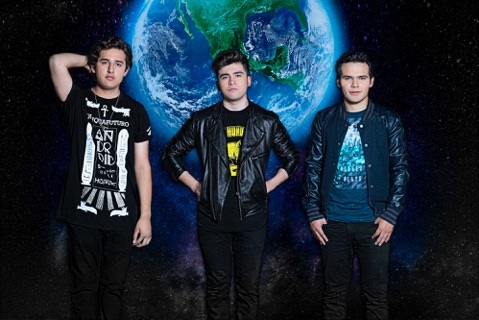
To view the multimedia assets associated with this release, please click http://www.multivu.com/players/English/7231531-honda-stage-music-news/
ETS Launches Georgia’s Teacher Leadership Performance-Based Assessment
ETS Launches Georgia’s Teacher Leadership Performance-Based Assessment
PRINCETON, New Jersey, Dec. 8, 2014 /PRNewswire-HISPANIC PR WIRE/ — Since ETS administered its first Georgia Assessments for the Certification of Educators® (GACE®) assessments in October 2013, in collaboration with the Georgia Professional Standards Commission (GaPSC), the program has continued to evolve. Building upon the initial offering of 45 test titles, and the recent introduction of a first-of-its-kind Educator Ethics Assessment, the GACE Teacher Leadership assessment launched in November.
Logo – http://photos.prnewswire.com/prnh/20120110/DC33419LOGO
“The GACE Teacher Leadership assessment measures the critical leadership roles that teachers play in contributing to student and school success,” said George Powell, Vice President and COO of Teacher Licensure & Certification Programs at ETS. “It consists of six tasks that are scored according to task-specific rubrics and address specific standards within the Georgia Teacher Leadership Program Standards.”
The tasks are:
- Task 1: Adult Learning and the Collaborative Culture
- Task 2: Research for the Improvement of Practice’
- Task 3: Professional Learning
- Task 4: Observation and Use of Assessment Data
- Task 5: Collaboration with Families and the Community
- Task 6: Collaborative Teams and Advocacy
“Task responses are entered in a private, secure online submission system,” explains Jan Ruthven, Senior Director of the GACE Program. “Candidates seeking to earn a Lead Professional Certificate are granted eligibility to test by their program providers.”
This assessment addresses specific standards within the GaPSC’s Teacher Leadership Program Standards (PDF) and brings to fruition ETS’s work and contribution to the Teacher Leadership Consortium, which established the Teacher Leader Model Standards.
The GaPSC made the decision to create a Teacher Leadership assessment that mirrors the knowledge and skills set teacher leaders must have, so the decision was made to use a portfolio assessment rather than the traditional selected response format. “Under Georgia’s new Tiered Certification System, the Lead Professional certificate level will identify those educators prepared to support Induction Level teachers,” comments David Hill, GaPSC’s Director of Educator Preparation and Certification Divisions. Hill went on to point out that “successful schools have a cadre of highly skilled teachers equipped to lead school improvement work in the school learning community.”
Candidates can now register for the spring 2015 testing window and are to submit their responses online during the following submission window:
Spring 2015 Testing:
Registration: Open until May 15, 2015
Submission Window: January 18, 2015–May 31, 2015
For more information, please visit http://gace.ets.org/teacher_leadership/about/.
About ETS
At ETS, we advance quality and equity in education for people worldwide by creating assessments based on rigorous research. ETS serves individuals, educational institutions and government agencies by providing customized solutions for teacher certification, English language learning, and elementary, secondary and postsecondary education, and by conducting education research, analysis and policy studies. Founded as a nonprofit in 1947, ETS develops, administers and scores more than 50 million tests annually — including the TOEFL® and TOEIC® tests, the GRE® tests and The Praxis Series® assessments — in more than 180 countries, at over 9,000 locations worldwide. www.ets.org
East LA Community Corporation Celebrates Start Of Construction For Whittier Place Apartments
East LA Community Corporation Celebrates Start Of Construction For Whittier Place Apartments
Moen Incorporated, community leaders and partners lend support at groundbreaking event
LOS ANGELES, Dec. 8, 2014 /PRNewswire-HISPANIC PR WIRE/ — Moen Incorporated, the #1 faucet brand in North America (www.moen.com) will be among many prominent community leaders and supporters attending the groundbreaking ceremony for the new Whittier Place Apartments on Monday, December 8th at 1:00 pm hosted by the East LA Community Corporation (www.elacc.org), a prominent non-profit community service and advocacy organization dedicated to serving the needs of families and other residents of East Los Angeles.
Under its program dedicated to supporting affordable housing, Alcanzando Suenos con Moen (“Achieving Dreams with Moen”), the company is donating state-of-the-art and water-saving kitchen and bathroom fixtures for 25 units of the Whittier Place Apartments, located at 4125 Whittier Boulevard in unincorporated East Los Angeles, being developed by ELACC in partnership with the Los Angeles House of Ruth organization and others to provide single-parent families and others who have been or are at risk of being homeless. Veterans and their families who meet the funding restrictions for occupancy are encouraged to apply. Moen’s donation will help defray some of the costs so that additional funds can be used to support services for the program.
Also in attendance will include ELACC’s general contractors Walton Construction, architectural firm Gonzalez Goodale and County District 1 Supervisor Hilda Solis, among others.
Finance partners for the Whittier Place Apartments project include JP Morgan Chase, Enterprise Community Partners, the California Tax Credit Allocation Committee, First 5 Los Angeles, the Los Angeles County Community Development Commission and the Corporation for Supportive Housing.
Founded in 1995, ELACC is a well-established 501(c) (3) nonprofit organization that provides affordable housing, community services, community organizing, and wealth building services to over 2,000 residents. ELACC’s track record includes leveraging over $135 million of investment to the Eastside and housing over 1,000 residents in safe, habitable, and affordable housing throughout East Los Angeles.
The Alcanzando Suenos con Moen program was launched by Moen Incorporated in 2007 in partnership with the Hispanic Housing Development Corporation, a major nonprofit builder of affordable homes in Chicago. Through the program, Moen contributes several hundred thousand dollars worth of products annually to affordable housing projects serving predominantly Hispanic communities around the country, including major markets such as Florida, CA., New York, Arizona, and Texas.
Aeromexico Starts Operating its New Flight New York – Monterrey
Aeromexico Starts Operating its New Flight New York – Monterrey
NEW YORK, Dec. 8, 2014 /PRNewswire-HISPANIC PR WIRE/ — Aeromexico, Mexico’s global airline, reiterates its goal to increase connectivity in New York by starting its new daily and non-stop service to Monterrey, Mexico one of the carrier’s largest airport hubs.
Photo – http://photos.prnewswire.com/prnh/20130315/MX77534LOGO
From now on, the airline’s passengers can enjoy daily service between the Big Apple and Monterrey on Embraer 190 jet airliners with 99 passenger seats, 11 of which are in Clase Premier, Aeromexico’s business class cabin.
The schedules for this route are as follows:
|
New York – Monterrey* |
Monterrey – New York* |
|||||||
|
AM415 |
3:00 p.m. |
7:17 p.m. |
Daily |
AM414 |
8:50 a.m. |
1:51 p.m. |
Daily |
|
|
*The schedules are provided in local time and are subject to changes without notice. |
||||||||
Anko van der Werff, Aeromexico EVP of Revenue Management said: “We are very proud to start operating this new flight between New York and Monterrey. This service extends our network connectivity to cities in Mexico like Guadalajara, Puerto Vallarta, Bajio-Leon, Queretaro, and Aguascalientes. At the same time, U.S. passengers can now connect from more destinations like Boston, Buffalo, Cleveland and Cincinnati, thanks to the Delta Air Lines codeshare flights, and to cities in Europe like Rome and Barcelona.”
Monterrey enjoys a privileged geographic location, in the north of Mexico and very close to the border with Texas. The city has earned renown worldwide for a variety of reasons, principally for its business climate with some of the leading corporates in Mexico, strong entrepreneurial culture, prestigious institutions of higher education and a world-class health sector with leading medical centers. The city has much to offer in terms of tourism – listed as one of the top three sites worldwide to practice canyoneering, and a lot of alternatives among canyons, mountains, ziplines, bungee and ponytail -, entertainment and culture, as well as extensive infrastructure for holding congresses and conventions.
“This new route creates more connectivity options between the northeastern US and the North of Mexico, to take advantage of the road infrastructure and the different domestic flights which Monterrey already has. This flight will facilitate trade opportunities between these two cities with large financial and business concentration. Monterrey has a booming industry, mainly manufacturing, food and petrochemical”, said Ambassador Sandra Fuentes-Berain, Consul General of Mexico in New York.
At the same time, Aeromexico, NYC & Company and MTB are working together to promote New York and Monterrey, in important places of both cities since late November.
“Aeromexico’s new service now provides enhanced access for more northern Mexican travelers to come to New York City’s five boroughs for business and leisure purposes,” said Makiko Matsuda Healy, Senior Vice President, Global Tourism Development for NYC & Company. “New York City is the number one U.S. destination for air travel from Mexico with 394,000 visitors anticipated this year.”
This new route is in addition of Aeromexico’s actual five daily flights from New York to Mexico City – one in codeshare with Delta Air Lines – and to its daily non-stop service to Cancun.
Terminal B at the Monterrey International Airport is one of the carrier’s main airport hubs from where Aeromexico offers direct and nonstop flights to 24 destinations. Six of these routes are in the United States, including Houston, New York, San Antonio, Las Vegas, Los Angeles, Atlanta and Detroit, the last three operated by SkyTeam airline alliance partner, Delta Air Lines.
About Grupo Aeromexico
Grupo Aeromexico, S.A.B. de C.V. is a holding company whose subsidiaries are engaged in providing commercial aviation services in Mexico and the promotion of passenger loyalty programs. Aeromexico, Mexico’s global airline, operates more than 600 daily flights from its main hub in Terminal 2 at the Mexico City International Airport. Its route network spans more than 80 cities on three continents, including 45 destinations in Mexico, 15 in the United States, 15 in Latin America, three in Europe, two in Asia and one in Canada.
The Group’s fleet of more than 115 aircraft is comprised of Boeing 787, 777, 767 and 737 jet airliners and next generation Embraer 145, 170, 175 and 190 models. In 2012, the airline announced the most significant investment strategy in aviation history in Mexico, to purchase 100 Boeing aircraft including 90 MAX 737 jet airliners and ten 787-9 Dreamliners.
As a founding member of the SkyTeam airline alliance, Aeromexico offers customers more than 1,000 destinations in 178 countries served by the 20 SkyTeam airline partners rewarding passengers with benefits including access to 564 premium airport lounges around the world. Aeromexico also offers travel options through its code share partners Delta Air Lines, Alaska Airlines, Avianca, LAN, TACA and TAM with extensive connectivity in countries like the United States, Brazil, Canada, Chile, Colombia and Peru. www.aeromexico.com, www.skyteam.com and http://disfrutaam.tumblr.com
Brady Campaign Targets Phoenix ‘Bad Apple’ Gun Dealer as Part of National Campaign
Brady Campaign Targets Phoenix ‘Bad Apple’ Gun Dealer as Part of National Campaign
Phoenix community rallies against Windy City Pawn Brokers for selling guns to straw purchasers
who flood our nation’s streets with guns used in
crimes
PHOENIX, Dec. 8, 2014 /PRNewswire-HISPANIC PR WIRE/ — Local Phoenix community leaders and activists joined the Brady Campaign to Prevent Gun Violence to protest Windy City Pawn Brokers, which sells guns to straw purchasers. Their irresponsible business practices give criminals easy access to guns that often end up being used in crimes committed in Phoenix and elsewhere. Ninety percent of the nation’s guns used in crimes come from just five percent of “bad apple” gun dealers, such as Windy City Pawn Brokers in Phoenix.
“‘Bad Apple’ gun dealers such as Windy City have chosen profits over people’s safety and are therefore largely responsible for America’s gun violence,” said Dan Gross, President of the Brady Campaign to Prevent Gun Violence. “We are working with our partners in Phoenix and across the nation who are directly impacted by gun violence to demand these ‘bad apples’ change their business practices and sell guns responsibly. We are fed up with the violence in our communities. This is something we can do to make a real difference – to keep guns out of the hands of criminals and to keep our communities and our children safe.”
Joining the Brady Campaign outside Windy City Pawn Brokers were Daniel Ortega, Phoenix attorney and former Chair of the Board of Directors of National Council of La Raza; Rev. Jose Olagues, the former Associate Executive of the Presbytery of Grand Canyon; Chris Kitaeff, a federal firearms licensee, avid outdoorsman, and a board member of Arizonans for Gun Safety; and Jose Guzman and Lupe Sanchez, whose 17-year-old son was working at Subway when he was shot and killed during a robbery attempt.
“Turning a blind eye to straw purchasers, gun traffickers and criminals only contributes to the ongoing and unnecessary violence we see every day in our streets,” said Jose Guzman. “As the father of a gun violence victim, I know firsthand how important it is that we do everything we can to keep guns out of the hands of dangerous people.”
This fall, in Chicago, the Brady Campaign launched a campaign, “Stop Bad Apple Gun Dealers” which leverages lawsuits to demand change in the gun industry. The initiative mobilizes communities to apply local pressure directly to “bad apple” gun dealers to demand change in their business practices, which would keep guns out of the hands of dangerous people. The campaign calls for dealers to videotape all gun sales, perform criminal background checks on all employees as part of a “Code of Conduct” that defines policies and practices gun dealers should adopt to prevent the diversion of guns into the illegal market. Each element of the proposed Code has either been suggested by the Bureau of Alcohol, Tobacco, Firearms and Explosives (ATF), imposed as a legal requirement in certain states, accepted by dealers as part of litigation settlements, or urged as a standard by major gun industry trade associations.
Implementing the Code, in addition to following all applicable federal, state and local laws regarding gun sales, will dramatically decrease the probability that a dealer will be a source of guns for criminals and other prohibited or dangerous people.
“Most gun dealers are responsible business people, but the ‘bad apple’ gun dealers who choose to profit off the criminal market need to be held accountable for the gun violence they contribute to in our communities,” said Jonathan Lowy, director of the Brady’s Legal Action Project. “We are going to force ‘bad apples’ out of business, and send a resounding message to the gun industry that it must clean up its act.”
“This is about protecting our community,” said Daniel Ortega. “For the Latino community – my community – this is a serious concern for us. These ‘bad apple’ dealers do not care where these guns end up. I am here to take a stand and make it clear that I do not want these guns on our streets.”
To learn more about the “Stop Bad Apple Gun Dealers” initiative, a list of pending lawsuits against gun dealers, and the Code of Conduct for responsible gun sales, visit: BradyCampaign.org/StopBadApples
The mission of the Brady organization is to create a safer America for all of us that will lead to a dramatic reduction in gun deaths and injuries. For more insight on gun violence prevention, follow us on Facebook and Twitter @BradyBuzz.