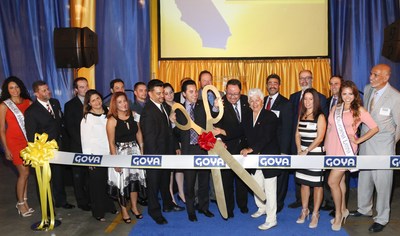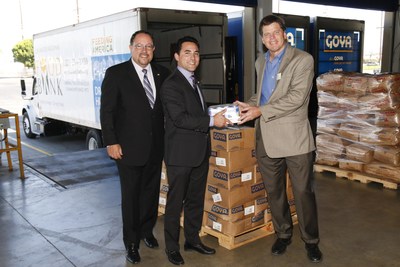
Colgate-Palmolive Kicks-Off Annual Haz la U™ Educational Grant Program in Celebration of Hispanic Heritage Month
Colgate Partners with the Hispanic Heritage Foundation’s 2014 Youth Awards to Provide $45,000 in College Grants
NEW YORK, Sept. 17, 2014 /PRNewswire-HISPANIC PR WIRE/ — In celebration of Hispanic Heritage Month, Colgate-Palmolive has partnered with the Hispanic Heritage Foundation (HHF) to kick- off of the company’s annual Haz la U™ educational grant program. Now in its sixth year, the Haz la U™ program will partner with the HHF’s Youth Awards program and its community service “track,” which focuses on high school seniors dedicated to helping their communities while maintaining a 3.5 GPA or higher, to award $45,000 in grants to 30 students.
“Colgate continues to invest in increasing the amount of Hispanics enrolled in college by helping assuage financial stress for families,” said, Carla Kelly, General Manager of Multicultural Marketing, Colgate-Palmolive. “Our partnership with the Hispanic Heritage Foundation is a testament to the value we place not only in educating our leaders but also on celebrating individuals who are looking to help their communities.”
Beginning today through October 31, students can apply for the community service “track” via www.hhfawards.hispanicheritage.org. Thirty high school students will be selected by the Hispanic Heritage Foundation to receive $1,500 educational grants from Colgate-Palmolive to help pay for higher education. All grant recipients will also be eligible to participate in the HHF’s ‘Latinos on Fast Track’ (LOFT), a national program that accelerates careers by providing professional career guidance.
“We’re pleased that the Colgate Palmolive Company is not only involved, but is working closely working with us to spread awareness about our youth programs by encouraging our young leaders to get engaged,” said Jose Antonio Tijerino, HHF President and CEO. “Colgate’s Haz la U™ educational grant program helps alleviate some of the financial pressures that first-year students and their families experience, with the broader goal of increasing graduation rates.”
For the last 15 years, the HHF’s Youth Awards program has honored hundreds of young Latino leaders in the U.S. with grants to help finance college tuition or to help fund a community service effort of their choice. To learn more about Haz la U™ and to access application guidelines, please visit www.colgate.com/hazlau.
About Colgate-Palmolive Company
Colgate-Palmolive is a leading global consumer products company, tightly focused on oral care, personal care, home care and pet nutrition. Colgate-Palmolive sells its products in over 200 countries and territories around the world, under such internationally recognized brand names as Colgate, Palmolive, Mennen, Softsoap, Irish Spring, Protex, Sorriso, Kolynos, Elmex, Tom’s of Maine, Sanex, Ajax, Axion, Soupline, and Suavitel, as well as Hill’s Science Diet and Hill’s Prescription Diet. For more information about Colgate-Palmolive’s global business, visit the Company’s website at www.Colgate.com. To learn more about Colgate Bright Smiles, Bright Futures®, Colgate’s global oral health education program, please visit http://www.colgatebsbf.com.
About HHF and LOFT
The Hispanic Heritage Foundation, a nonprofit originally established by the White House in 1987, inspires, prepares, positions and connects minority leaders in the classroom, community and workforce to meet America’s priorities. HHF also promotes cultural pride, accomplishment, and the great promise of the community through public awareness campaigns seen by millions. HHF is headquartered in Washington, DC, and has offices in Los Angeles, New York and the LOFT Institute is housed at Michigan State University (Visit www.HispanicHeritage.org). Follow Hispanic Heritage Foundation on Facebook and @HHFoundation on Twitter.
HHF’s award-winning LOFT leadership and workforce development program is divided into 10 “Tracks,” or industries, which are priorities for America including Innovation & Technology, Science & Healthcare, Engineering, Finance, Entrepreneurship, Education, Public Service, Law, Media & Entertainment, and Latinas. Tens of thousands of students and young professionals are connected to each other and to mentors and resources; over 50 trainings, workshops, and informal Charlas are hosted across the country; creative initiatives are executed; and hundreds of minorities are placed into internships, mentorships, fellowships and full-time positions with Fortune 500 companies and government agencies. Visit www.loftinnovation.org, and join http://loftnetwork.org to get on the fast track to leadership. Follow LOFTinstitute on Twitter.
Entravision Communications Corporation Teams with Catholic Charities USA to Promote Awareness and Support for Latino Community
New Joint Effort Calls On Communities Across The Nation To Meet The Immediate Needs Of Immigrant Families And Unaccompanied Children
SANTA MONICA, Calif., Sept. 17, 2014 /PRNewswire-HISPANIC PR WIRE/ — Entravision Communications Corporation (NYSE: EVC), a diversified media company serving Latino audiences and communities, and Catholic Charities USA (CCUSA), one of the nation’s largest networks of social service providers, today announced a new joint effort to raise awareness and generate support for U.S. Latinos in need. This effort will focus immediately on providing aid and assistance to the families and unaccompanied minors arriving from Central America along the U.S. border.
CCUSA has been active in advocating and providing for these vulnerable individuals – an issue which has been a focus of extensive news coverage on Entravision’s media platforms. Beginning this month, Entravision will utilize its integrated platform of television, radio, online, mobile and social media assets, and leverage its strong presence in U.S. border markets and across the country, by further expanding its coverage of the issue and raising audience awareness and engagement on a local and national level. Entravision and CCUSA will collaborate through multimedia public service announcements, promoting volunteering opportunities and fundraising initiatives to encourage community participation on this issue. This effort is part of a long-term relationship between Entravision and CCUSA to further their respective philanthropic work, including their efforts to inform, educate and engage U.S. Latinos on the issues most important to them, and to reduce poverty, support families and empower communities.
“We are very proud to join with Catholic Charities USA and further strengthen our commitment and service to the Latino community that we jointly serve,” said Walter F. Ulloa, Chairman and Chief Executive Officer of Entravision. “CCUSA’s unwavering dedication to unaccompanied child immigrants and Latino families has been exceptional. This is an inspiring opportunity for Entravision to expand its role in engaging our audiences on the issues that are important to our communities. Our large presence among the border markets presents us with a firsthand perspective and a unique opportunity to call upon our employees and resident communities for their attention and involvement. As a company focused on serving Latino audiences and communities, this effort will be a long-term alliance with CCUSA that builds on Entravision’s history of supporting its local communities and commitment to responding to the needs of Latinos nationwide.”
“Most immediately, we believe this partnership and the vast resources that Entravision brings to the table will yield sustainable benefits to help us address a complex and multi-faceted issue,” said Father Larry Snyder, president of CCUSA. “We are thrilled to embark upon this unique venture with Entravision. Collectively, our efforts will help educate, engage and empower the Latino community and we look forward to a mutually rewarding partnership that continues to grow over time.”
Partnering with Catholic Charities USA is part of Entravision’s ongoing efforts to inform, educate and engage the communities it serves on the issues most important to them. Other recent efforts include Entravision and Children’s Miracle Network Hospitals Annual Radiothon, which celebrated its 7th year in 2014 by raising over $2 million for 24 member hospitals; multiplatform campaigns to encourage voter participation; and ongoing efforts to inform the community on health care, immigration and other social issues relevant to audiences via local news coverage and online and multimedia promotions.
About Entravision Communications Corporation
Entravision Communications Corporation is a diversified media company serving Latino audiences and communities with an integrated platform of solutions and services that includes television, radio, digital media and data analytics to reach Latino audiences across the United States and Latin America. Entravision has 58 primary television stations, including in 20 of the nation’s top 50 Latino markets, and is the largest affiliate group of both the top-ranked Univision television network and Univision’s UniMas network. Entravision also operates one of the nation’s largest groups of primarily Spanish-language radio stations, consisting of 49 owned and operated radio stations, and Entravision Solutions, a national sales representation and marketing organization specializing in Spanish-language media platforms and radio networks. Entravision also offers a variety of digital media platforms and services, including digital content, digital advertising platforms, including the #1-ranked online advertising platform in Hispanic reach, and data analytics solutions designed to maximize the opportunity for advertisers and marketers to connect with the growing Latino consumer market. Entravision shares of Class A Common Stock are traded on The New York Stock Exchange under the symbol: EVC.
About Catholic Charities USA
Catholic Charities USA (CCUSA) is the national office for Catholic Charities agencies nationwide. Catholic Charities USA’s members provide help and create hope for millions of people a year, regardless of their religious, social, or economic background. CCUSA provides leadership and support for the work of local agencies in their efforts to reduce poverty, support families, and empower communities. The mission of Catholic Charities is to provide service to people in need, to advocate for justice in social structures, and to call the entire church and other people of good will to do the same.
“Saturdays at ETS” Symposium to Focus on the Changing Higher Education Landscape and its Impact on Underserved Students
PRINCETON, New Jersey, September 16, 2014 /PRNewswire-HISPANIC PR WIRE/ — In its ongoing “Saturdays at ETS” symposiums, leading educators and public policy experts from across the nation will gather September 20, to explore and discuss the lifelong benefits of postsecondary education, especially for underserved students. The symposium is being held in cooperation with the National Urban League.
Logo – http://photos.prnewswire.com/prnh/20120110/DC33419LOGO
The theme of the symposium is, “Postsecondary Success for All: Building Support for Lifelong Achievement Through Education.” It will take place Saturday, September 20, 2014, from 8:30 a.m. – 4 p.m. at the Chauncey Conference Center in Princeton, N.J.
Speakers include:
- James Applegate, Illinois Board of Higher Education
- Lezli Baskerville, The National Association for Equal Opportunity in Higher Education
- Sandy Baum, Urban Institute
- Wayne Frederick, Howard University
- Marybeth Gasman, University of Pennsylvania
- John Harmon, The African-American Chamber of Commerce of New Jersey
- Richard Kahlenberg, Century Foundation
- Walt MacDonald, ETS
- Michael Nettles, ETS
- Hal Smith, National Urban League
- H.James Williams, Fisk University
- Raymond Yannuzzi, Camden County College
“For the past half century, postsecondary education has grown steadily in value and this trend continues as postsecondary institutions and offerings become increasingly diverse and access and opportunity also expand,” explains co-host Michael Nettles, Senior Vice President, of ETS’s Policy Evaluation & Research Center. “People who attain high quality postsecondary education and degrees increase their likelihood of also achieving higher personal careers and lifetime earnings, greater community value, and a higher quality of life.”
“This symposium will focus on understanding the growing variety of ways that people are pursuing postsecondary education and credentials, the growing variety of people who are participating and the public policy and community investments required to achieve success,” he adds. “We’ll examine strategies being employed to increase persistence and attainment and promising practices to achieve educational opportunity and postsecondary success for all students, regardless of their demographic characteristics or their family’s tradition of participation in postsecondary education.”
“The goal of the symposium is to increase knowledge and understanding about the changing landscape of higher education access and completion and to involve stakeholders in building support for greater success of underserved students and their postsecondary institutions,” says Hal Smith, NUL Senior Vice President for Education and Youth Development. “We invite people to join us for a look at the challenges of pursing equity in higher education, utilizing minority serving institutions as routes to success, and building support for underserved students.”
For additional information, visit www.ets.org/achievementgap. Persons interested in attending should register for the free event by September 18, 2014.
About ETS
At ETS, we advance quality and equity in education for people worldwide by creating assessments based on rigorous research. ETS serves individuals, educational institutions and government agencies by providing customized solutions for teacher certification, English language learning, and elementary, secondary and postsecondary education, and by conducting education research, analysis and policy studies. Founded as a nonprofit in 1947, ETS develops, administers and scores more than 50 million tests annually — including the TOEFL® and TOEIC ® tests, the GRE ® tests and The Praxis Series ® assessments — in more than 180 countries, at over 9,000 locations worldwide.
Vme TV CEO Eligio Cedeno Named 2014 “Businessman of the Year” by USHCC
Majority owner and CEO of V-me Media Inc. to be honored at the USHCC National Convention on September 23, 2014 in Salt Lake City, Utah
MIAMI, Sept. 16, 2014 /PRNewswire-HISPANIC PR WIRE/ — Vme TV, the only national Spanish-language television network affiliated with public television stations, is proud to announce that Vme TV CEO, Eligio Cedeno will be honored as the “2014 Businessman of the Year” by the United States Hispanic Chamber of Commerce (USHCC). Cedeno will be recognized during the USHCC National Convention on September 23, 2014 in Salt Lake City, Utah.
“Being named the USHCC ‘Businessman of the Year’ is a great honor as it signifies that the work we do at Vme TV is touching lives nationwide,” said Cedeno. “We at Vme TV will continue to drive the narrative that Hispanic Americans play a pivotal role in the success of this country and should have access to media content that reflects who we truly are as a community.”
Each year, the USHCC recognizes an executive whose outstanding leadership, pioneering spirit, and social and economic contributions exemplify the best of America’s Hispanic business leadership. As the CEO of the country’s largest minority owned network, Cedeno has demonstrated a unique vision and commitment to providing the Hispanic American community with educational, entertaining, inspiring and enriching media content that is geared toward empowering Hispanic Americans and promoting upward mobility in the Latino community.
“During his tenure at Vme TV, Eligio has devoted his time, resources, and passion toward educating and inspiring young children and families with quality television programming. Driven by his personal journey, Eligio recognizes the cultural challenges faced by many, and has leveraged the power of media to help break down barriers for America’s Spanish speaking viewers,” said USHCC President & CEO Javier Palomarez. “We commend Eligio for offering his talents in service to the Hispanic community and our nation as a whole, and are proud to recognize him as the 2014 Businessman of the Year.”
Cedeno, who moved to the United States from Venezuela four years ago, has witnessed first hand how the lack of access to credible and trustworthy media sources can negatively impact communities at large. This experience led him to seek the opportunity to spearhead Vme TV in 2013. Under his leadership, the channel has successfully positioned itself among industry leaders and consumers as the go-to source for quality, family friendly, Spanish-language content in the United States.
ABOUT VME TELEVISION
Vme TV (pronounced veh-meh), is the first national Spanish-language television network in association with public television stations. Reaching more than 70 million households in the United States, Vme TV is broadcast in 43 markets by PBS stations and is available on DIRECTV, DISH Network, AT&T U-verse, as well as major cable companies including Comcast. The 24-hour digital broadcast service is dedicated to entertain, educate and inspire families in Spanish with a contemporary mix of original productions, exclusive premieres, acquisitions, and popular public television programs specially adapted for Hispanics. To find your local channel or to learn more about Vme TV, visit www.vmetv.com (http://www.vmetv.com/mediakit) or follow us on social media via www.facebook.com/vmetv or www.twitter.com/vmetv.
Vallarta Supermarkets Children’s Miracle Network Fundraiser Check Presentation at Top-Raising Location
Media are invited Thursday, September 18, 2014, between 10:30am and 1:30pm
MEDIA MUST RSVP
SYLMAR, Calif., Sept. 16, 2014 /PRNewswire-HISPANIC PR WIRE/ —
Logo – http://photos.prnewswire.com/prnh/20140103/LA39827LOGO
|
WHAT: |
Vallarta Supermarkets hosts its chain-wide Children’s Miracle Network Fundraiser each year in August. Between all 44 locations, more than $200 thousand dollars were raised for local Children’s Hospital’s (including Children’s Hospital Central California). Vallarta Supermarkets on Butler Avenue in Fresno, California was out of all locations, the Top-Raising store funding over $19 thousand dollars in only 4 weeks. Vallarta Supermarkets will be hosting a check presentation at this location to honor the community’s support and recognize the store team’s success. |
|
WHEN: |
Thursday, September 18, 11am – 1pm
*Media are invited Thursday, September 18, 2014, between 10:30am and 1:30pm |
|
WHERE: |
Vallarta Supermarkets |
|
4831 Butler Ave |
|
|
Fresno, California 93727 |
|
|
WHY: |
Vallarta Supermarkets is firmly committed to assisting the local communities they serve, this is now the 4th year Vallarta participates with the Children’s Miracle Network. All funds raised at each location are sent directly to each store’s corresponding Children’s Hospital. Hospitals included in this fundraiser are: Children’s Hospital Los Angeles, Bakersfield Memorial Hospital, Children’s Hospital Central California, Cottage Health System, Children’s Hospital Orange County, and Rady Children’s Hospital. Last year Vallarta Supermarkets (with 42 locations) raised over $165 thousand dollars. In August 2014, the total raised (between 44 locations) surpassed a historic $200 thousand dollars. |
ABOUT VALLARTA SUPERMARKETS:
Founded in 1985 by Enrique Gonzalez, Sr; Vallarta Supermarkets is a full-service grocery independent chain with 44 locations throughout the state of California. Vallarta Supermarkets is known for having fresh produce, top-quality meats, exquisite pastries, and specialty items from Latin America and other parts of the world. Visit www.vallartasupermarkets.com for additional information.
ABOUT CHILDREN’S MIRACLE NETWORK:
Children’s Miracle Network Hospitals® raises funds and awareness for 170 member hospitals that provide 32 million treatments each year to kids across the U.S. and Canada. Donations stay local to fund critical treatments and healthcare services, pediatric medical equipment and charitable care.
CONTACT:
Vallarta Supermarkets
Ruby Martinez, (818) 898-0088 ext 1224
[email protected]
Tony Hernandez (818) 898-0088
[email protected]
Income, Poverty and Health Insurance Coverage in the United States: 2013
WASHINGTON, Sept. 16, 2014 /PRNewswire-HISPANIC PR WIRE/ — The U.S. Census Bureau announced today that in 2013, the poverty rate declined from the previous year for the first time since 2006, while there was no statistically significant change in either the number of people living in poverty or real median household income. In addition, the poverty rate for children under 18 declined from the previous year for the first time since 2000. The following results for the nation were compiled from information collected in the 2014 Current Population Survey Annual Social and Economic Supplement.
Logo – http://photos.prnewswire.com/prnh/20110428/DC91889LOGO
The nation’s official poverty rate in 2013 was 14.5 percent, down from 15.0 percent in 2012. The 45.3 million people living at or below the poverty line in 2013, for the third consecutive year, did not represent a statistically significant change from the previous year’s estimate.
Median household income in the United States in 2013 was $51,939; the change in real terms from the 2012 median of $51,759 was not statistically significant. This is the second consecutive year that the annual change was not statistically significant, following two consecutive annual declines.
The percentage of people without health insurance coverage for the entire 2013 calendar year was 13.4 percent; this amounted to 42.0 million people.
These findings are contained in two reports: Income and Poverty in the United States: 2013 and Health Insurance Coverage in the United States: 2013. The Current Population Survey Annual Social and Economic Supplement was conducted between February and April 2014 and collected information about income and health insurance coverage during the 2013 calendar year. The Current Population Survey, sponsored jointly by the U.S. Census Bureau and U.S. Bureau of Labor Statistics, is conducted every month and is the primary source of labor force statistics for the U.S. population; it is used to calculate the monthly unemployment rate estimates. Supplements are added in most months; the Annual Social and Economic Supplement questionnaire is designed to give annual, calendar-year, national estimates of income, poverty and health insurance numbers and rates.
Traditionally, the Census Bureau releases detailed comparisons of year-to-year changes in health insurance from this survey. However, because of the redesign of the Current Population Survey’s health insurance section of the questionnaire, its estimates of health insurance coverage are not directly comparable to estimates from prior years. Research suggested the Current Population Survey estimates needed improvement, as the estimates were not in line with other sources. The redesigned survey is based on over a decade of research, including two national field tests as well as cognitive testing. The survey improvements this year will better measure health insurance coverage for the prior calendar year, thus providing a strong 2013 baseline to measure future changes in health insurance coverage caused by the Affordable Care Act.
The health insurance report contains Current Population Survey statistics only for 2013. However, limited statistics on year-to-year changes based on the American Community Survey are available in the report. The report also includes state-level American Community Survey health insurance coverage statistics. According to the American Community Survey, the percent of people without health insurance coverage declined 0.2 percent between 2012 and 2013.
The American Community Survey has collected data on health insurance coverage since 2008. Additional sources of health insurance coverage data not included in this report are the Small Area Health Insurance Estimates and National Health Interview Survey.
The Current Population Survey-based income and poverty report includes comparisons with one year earlier. State and local income and poverty results, as well as state and local health insurance coverage results, will be available Thursday, Sept. 18, from the American Community Survey.
Income
- Real median incomes in 2013 for family households ($65,587) and nonfamily households ($31,178) did not experience a statistically significant change from the levels in 2012.
- A comparison of real median household income over the past six years shows that income is 8.0 percent lower than in 2007, the year before the nation entered an economic recession.
Race and Hispanic Origin
(Race data refer to people reporting a single race only; Hispanics can be of any race)
- The real median income of Hispanic households increased by 3.5 percent between 2012 and 2013. Changes were not statistically significant for any of the race groups, however. (See Table A.)
Regions
- Changes in real median household income were not statistically significant for any of the four regions between 2012 and 2013. (See Table A.)
Earnings
- The changes in the real median earnings of men and women who worked full time, year- round between 2012 and 2013 were not statistically significant. In 2013, the median earnings of women who worked full time, year-round ($39,157) was 78 percent of that for men working full time, year-round ($50,033) ─ not statistically different from the 2012 ratio. The female-to-male earnings ratio has not experienced a statistically significant annual increase since 2007.
- The number of men and women working full time, year-round with earnings increased by 1.8 million and 1.0 million, respectively, between 2012 and 2013. (The difference between the two increases was not statistically significant.) Since 2010, the year following the most recent recession, the total number of year-round, full-time workers has increased by 6.4 million.
Income Inequality
- The Gini index was 0.476 in 2013; the change from 2012 was not statistically significant. Since 1993, the earliest year available for comparable measures of income inequality, the Gini index has increased 4.9 percent. (Developed more than a century ago, the Gini index is the most common measure of household income inequality used by economists, with zero representing total income equality and one equivalent to total inequality.)
- Changes in income inequality between 2012 and 2013 were not statistically significant as measured by the shares of aggregate household income by quintiles.
Poverty
- The poverty rate for families fell from 11.8 percent in 2012 to 11.2 percent in 2013. The number of families in poverty declined from 9.5 million to 9.1 million over the same period.
- In 2013, 5.8 percent of married-couple families, 30.6 percent of families with a female householder and 15.9 percent of families with a male householder lived in poverty. For married-couple families, both the poverty rate and the number in poverty decreased. Neither the poverty rates nor the estimates of the number of families in poverty showed any statistically significant change between 2012 and 2013 for other types of families.
Thresholds
- As defined by the Office of Management and Budget and updated for inflation using the consumer price index, the weighted average poverty threshold for a family of four in 2013 was $23,834.
(See http://www.census.gov/hhes/www/poverty/data/threshld/index.html for the complete set of dollar value thresholds that vary by family size and composition.)
Sex
- Between 2012 and 2013, poverty rates fell for both males and females. In 2013, 13.1 percent of males and 15.8 percent of females were in poverty, down from 13.6 percent and 16.3 percent in 2012.
Race and Hispanic Origin
(Race data refer to people reporting a single race only; Hispanics can be of any race)
- Hispanics were the only group among the major race and ethnic groups to experience a statistically significant change in their poverty rate and the number of people in poverty (both the rate and number declined). Table B details 2013 poverty rates and numbers in poverty, as well as changes since 2012 in these measures, for race groups and Hispanics.
Age
- In 2013, 13.6 percent of people 18 to 64 (26.4 million) were in poverty compared with 9.5 percent of people 65 and older (4.2 million). Neither of these poverty rates experienced a statistically significant change from their 2012 estimates.
- The poverty rate for children under 18 declined from 21.8 percent in 2012 to 19.9 percent in 2013. The number of children in poverty also declined over the period, from 16.1 million to 14.7 million. This was the first time since 2000 that the child poverty rate declined.
Regions
- None of the four regions experienced a significant change in the poverty rate or the number in poverty between 2012 and 2013. (See Table B.)
Shared Households
Shared households are defined as households that include at least one “additional” adult: a person 18 or older who is not enrolled in school and is not the householder, spouse or cohabiting partner of the householder. The information on shared households covers adults living in the household at the time of the survey.
- In spring 2007, prior to the recession, there were 19.7 million shared households, representing 17.0 percent of all households. By spring 2014, the number had increased to 23.5 million and represented 19.1 percent of all households. Between 2013 and 2014, the change in the number and percentage of shared households was not statistically significant.
- In spring 2014, 6.1 million young adults age 25 to 34 (14.4 percent) lived with their parents. Neither the number nor percentage experienced a statistically significant change from 2013.
- It is difficult to precisely assess the impact of household sharing on overall poverty rates. In 2014, young adults age 25 to 34, living with their parents, had an official poverty rate of 9.3 percent, but if their poverty status were determined using only their own income, 43.7 percent had an income below the poverty threshold for a single person under age 65.
Health Insurance Coverage
- The Current Population Survey shows that the percentage of people with health insurance for all or part of 2013 was 86.6 percent, and 13.4 percent did not have health insurance for the entire year.
- Full-time, year-round workers were more likely to be covered by health insurance (86.1 percent) than those who worked less than full-time, year round (76.0 percent) or non-workers (77.6 percent).
- Among adults age 18 to 64 with a disability, 39.3 percent had private health insurance, compared with 70.7 percent of their counterparts with no disability in 2013. More than half (56.6 percent) of people with a disability had government-provided health insurance. The percentage of working-age adults with a disability who had any type of health insurance coverage was higher than the comparable population with no disability (86.2 percent, compared with 81.1 percent.)
- In 2013, the majority of individuals (64.2 percent) were covered by private health insurance. The largest single type of health insurance in 2013 was employment-based health insurance, which covered 53.9 percent of the population.
- In 2013, 34.3 percent of the population was covered by government health insurance. The percentage of people covered by Medicaid in 2013 was 17.3 percent and the percentage covered by Medicare was 15.6 percent.
- The percentage of uninsured children younger than 19 was 7.6 percent in 2013.
- In 2013, the uninsured rate for children younger than 19 in poverty (9.8 percent) was higher than the uninsured rate for children not in poverty (7.0 percent).
- In 2013, 9.8 percent of non-Hispanic whites were uninsured, compared with 15.9 percent of blacks and 24.3 percent of Hispanics.
Supplemental Poverty Measure
The poverty statistics released today compare the official poverty thresholds to money income before taxes, not including the value of non-cash benefits. The Census Bureau’s statistical experts, with assistance from the Bureau of Labor Statistics and in consultation with other federal agencies and researchers from both within and outside of academia, have developed a supplemental poverty measure to serve as an additional indicator of economic well-being by incorporating additional items such as tax payments and work expenses in its family resource estimates. It does not replace the official poverty measure and will not be used to determine eligibility for government programs. See Income and Poverty in the United States: 2013 for more information. The Census Bureau published preliminary poverty estimates using this supplemental measure in November 2011, 2012 and 2013. Supplemental poverty estimates for 2013 will be published in October 2014.
State and Local Estimates from the American Community Survey
On Thursday, Sept. 18, the Census Bureau will release single-year estimates of median household income, poverty and health insurance for all states, counties, places and other geographic units with populations of 65,000 or more from the 2013 American Community Survey. These statistics will include numerous social, economic and housing characteristics, such as language, education, commuting, employment, mortgage status and rent. Later today, subscribers will be able to access these estimates on an embargoed basis. Reports on income, poverty and health insurance using American Community Survey data will also be released Thursday.
The American Community Survey provides a wide range of important statistics about people and housing for every community (i.e., census tracts, or neighborhoods) across the nation. The results are used by everyone from town and city planners to retailers and homebuilders. The survey is the only source of local estimates for most of the 40 topics it covers for even the smallest communities.
Redesigned Questions
The 2014 Current Population Survey Annual Social and Economic Supplement included redesigned questions for income and health insurance coverage. All of the approximately 98,000 addresses included in the survey were eligible to receive the redesigned health insurance coverage questions. The redesigned income questions were implemented to a subsample of those 98,000 addresses using a probability split panel design. Approximately 68,000 addresses were eligible to receive income questions similar to those used in the 2013 survey and the remaining 30,000 addresses were eligible to receive the redesigned income questions. The source of data in both reports, Income and Poverty in the United States: 2013 and Health Insurance Coverage in the United States: 2013, is the portion of the Current Population Survey Social and Economic Supplement sample (68,000 addresses) that received the set of income questions consistent with those in the 2013 survey. A probability split panel design means the Census Bureau assigned each address in the sample to either the traditional questionnaire or the alternate redesigned questionnaire based on a random number.
The Current Population Survey Annual Social and Economic Supplement is subject to sampling and nonsampling errors. All comparisons made in the report have been tested and found to be statistically significant at the 90 percent confidence level, unless otherwise noted.
For additional information on the source of the data and accuracy of the estimates, visit ftp://ftp2.census.gov/library/publications/2014/demo/p60-249sa.pdf.
Public Information Office CB14-169
301-763-3030
email: [email protected]
Media kit
Income and Poverty Report
Health Insurance Report
Income data
Poverty data
Health insurance coverage data
New Ad Council Campaign Gives Hispanic Parents Resources & Support to Help Their Children Prepare, Plan, and Pay for College
Actors Adam Rodriguez and Edward James Olmos Join Univision Anchors Jorge Ramos and Maria Elena Salinas in New Hispanic Scholarship Fund and Ad Council PSAs
NEW YORK, Sept. 16, 2014 /PRNewswire-HISPANIC PR WIRE/ — In celebration of Hispanic Heritage Month, which runs from September 15 to October 15, the Hispanic Scholarship Fund (HSF), in partnership with the Ad Council, is launching a new, national public service advertising (PSA) campaign to give Hispanic parents access to the resources they need to help their children prepare, plan, and pay for college.
To view the multimedia assets associated with this release, please click – http://www.multivu.com/players/Spanish/7317152-advertising-council-y-hispanic-scholarship-fund-psa
Today, Hispanics account for 19% of all college students, ages 18 to 24, up from 12% in 2008. What’s more, 69% of Hispanic graduates are now going directly to college after graduating high school, a rate that is higher than that of the general population. This unprecedented surge in Hispanic college-bound students underscores the need to provide more information about college and more financial resources than ever before.
“I am so honored to be a part of this campaign,” said Adam Rodriguez, actor, screenwriter, director, star of television series CSI: Miami and Reckless, and member of the Hispanic Scholarship Fund’s Board of Directors. “Higher education is an integral stepping stone towards a successful future in this country, and I hope that these PSAs will equip parents to be the support system that their kids need to get to and through college.”
“With Latinos representing one in four people in America under age 18, it is more important than ever for HSF to provide scholarships and services to students, as well as provide resources for their parents,” said Fidel A. Vargas, President & CEO, Hispanic Scholarship Fund. “Their success in college is more important than ever, and this is our opportunity to help Latino students not only reach college, but make the most of their college experience. We hope this campaign will equip even more Hispanic parents and students with the tools they need to plan, prepare, and pay for college.”
The new PSAs, featuring actors Adam Rodriguez and Edward James Olmos, and Univision co-anchors Jorge Ramos and Maria Elena Salinas, specifically target Hispanic parents. The PSA campaign empowers parents to help their children navigate the college application process and access the resources and support needed to excel in their studies and graduate. According to a 2009 Pew Hispanic Center survey, 88% of Latinos ages 16 and older agreed that a college degree is necessary to get ahead in life today, as compared to only 74% of all Americans ages 16 and older. This new Ad Council campaign is designed to provide Hispanic parents with the information and resources they need to ensure their children attain a college degree.
“We are thrilled with these new PSAs and the campaign as a whole,” said Ad Council President and CEO, Peggy Conlon. “Hispanic parents have a wonderful opportunity to shape the future of their children and to give them the chance to pursue a higher education and the opportunities that go with it. These PSAs encourage and inspire action. We believe they will make a huge impact.”
The new TV, print, radio, outdoor, and digital PSAs were created pro bono by ad agency, The Vidal Partnership. They drive the audiences to HSF.net, where parents can find resources and tips to help their children.
About The Ad Council
The Ad Council is a private, non-profit organization with a rich history of marshalling volunteer talent from the advertising and media industries to deliver critical messages to the American public. Having produced literally thousands of PSA campaigns addressing the most pressing social issues of the day, the Ad Council has affected, and continues to affect, tremendous positive change by raising awareness, inspiring action and saving lives. To learn more about the Ad Council and its campaigns, visit www.adcouncil.org, like us on Facebook, follow us on Twitter or view our PSAs on YouTube.
About the Hispanic Scholarship Fund
Founded in 1975, the Hispanic Scholarship Fund provides scholarships to Latino students, as well as related support services. HSF seeks to give students all the tools they need to apply to college, do well in their course work, graduate, enter a profession, excel, help lead our nation going forward, and mentor the generations to come. As the nation’s largest not-for-profit organization supporting Hispanic American higher education, the Fund has awarded over $470 million in scholarships and provides a range of ancillary programs for students, HSF Scholars, and their families. HSF further strives to make college education a top priority for every Latino family across the nation, mobilizing our community to proactively advance that goal – each individual, over a lifetime, in every way he/she can. For more information about the Hispanic Scholarship Fund, please visit: HSF.net.
About The Vidal Partnership
Founded in 1999, The Vidal Partnership is a leader in multicultural marketing communications located in New York City. Fiercely independent and certified 100% minority-owned and managed, TVP helps brands thrive in multicultural culture by creating compelling and innovative solutions that build the business of top-tier clients including Aaron’s, Cablevision – Optimum, HomeSmart, Lincoln Financial Group, Hispanic Scholarship Fund, Powerful Yogurt, Remy Martin USA, TD Bank and the NFL. TVP is a three-time Agency of the Year, four-time Advertising Age A-List Agency and a three-time AHAA Creative Awards Best in Show winner. For more information, visit vidalpartnership.com.