Page 8

Citadel Credit Union Announces Third Philadelphia Branch Coming to Hunting Park in 2027

0
Citadel Credit Union, Building Strength Together

Citadel Credit Union Announces Third Philadelphia Branch Coming to Hunting Park in 2027

PR Newswire

Developed in partnership with Esperanza, the new location will bring financial education, community programming and full-service banking to this North Philadelphia neighborhood.

EXTON, Pa., Aug. 11, 2026 /PRNewswire-HISPANIC PR WIRE/ — Citadel Credit Union, a not-for-profit, member-owned financial institution, today announced it has signed a lease for its third Philadelphia branch, located in the Hunting Park section of North Philadelphia. Slated to open in 2027 at 133 W. Hunting Park Ave., the branch will be developed in partnership with Esperanza, one of the nation’s largest Hispanic, faith-based nonprofit organizations and the building’s landlord. The location continues a Philadelphia expansion strategy built around neighborhoods, relationships and long-term community investment.
Citadel Credit Union, Building Strength Together

Like its two Philadelphia predecessors, the Hunting Park branch is designed to be more than a place to bank. It will serve as a space where residents, families and small businesses can access financial services, financial education and meaningful community programming rooted in the neighborhood it serves.

“We’ve always believed the most important thing we can do is show up,” said Bill Brown, president and CEO of Citadel Credit Union. “Not just to open a branch but to genuinely earn a place in a community. Hunting Park has deep roots, proud people and real opportunity. Partnering with Esperanza means we’re not arriving as an outside institution. We’re coming in as neighbors, ready to listen and grow alongside the people we’re here to serve.”

Building on a Philadelphia Commitment
The Hunting Park announcement is the next chapter in Citadel’s expanding Philadelphia presence. After opening its first Philadelphia branch in Overbrook Park in January 2026, the credit union welcomed the community to a grand opening celebration in May, marked by a ribbon-cutting ceremony and block party, attended by elected officials, neighborhood leaders, and residents. A second location, set to open later this year in Cedar Park, at 4900 Baltimore Ave., will bring Citadel’s community-centered model to a well-established West Philadelphia corridor.

Hunting Park extends that footprint into North Philadelphia, where more than 17,000 Citadel members already live, work, and study. Each Philadelphia branch is designed to function as a community hub offering financial resources, space for local partnerships, and programming that strengthens the neighborhoods Citadel calls home.

A Partnership Grounded in 40 Years of Community Work
Esperanza has been transforming Hunting Park for four decades. The organization has invested more than $300 million in community resources, serving approximately 35,000 low-income Philadelphians annually through programs that span housing counseling, workforce development, education, economic development, and the arts. Esperanza treats Hunting Park as an “opportunity community,” a neighborhood of strength and potential at every income level, and has built its work around a bilingual, culturally reflective approach that centers the Latino community and supports families across the district. That shared belief in place-based investment is what drew Citadel to the partnership.

“Trust in Hunting Park is built block by block. That’s what forty years here has taught us,” said Rev. Luis Cortés Jr., founder and CEO of Esperanza. “Citadel showed up ready to invest the same way. This branch gives our neighbors a place to build wealth in their own neighborhood. That’s what real investment looks like.”

More Than a Place to Bank
The branch will offer Citadel’s full range of personal and business banking, mortgage-lending services, and financial counseling. Beyond traditional banking, it will serve as a gathering place for financial education workshops, community events and neighborhood programming.

Philadelphia City Councilmember Quetcy Lozada, who represents the 7th District and is a lifelong resident of the neighborhoods she serves, welcomed the announcement.

“I’ve spent my whole life in this district, and before I was a council member, I spent years working with Esperanza to strengthen it,” said Councilmember Lozada. “I know the difference between a financial institution that shows up and one that’s truly invested. Citadel is coming in alongside Esperanza, with the right intentions and the right partner. Hunting Park deserves that kind of commitment, and I’m proud to welcome them to the 7th District.”

Growing Alongside Philadelphia
The Hunting Park branch is Citadel’s third Philadelphia location, reflecting a deliberate, long-term approach to expanding financial access across the city. The goal isn’t just to open branch doors. It’s to build real relationships in the neighborhoods where those resources are needed most. That’s what it means to grow with the community, not just alongside it.

About Citadel Credit Union
Citadel Credit Union is a not-for-profit, member-owned financial institution providing banking, investment, and insurance services to more than 290,000 members. With approximately $6.9 billion in assets and 25 branches, Citadel is one of the Greater Philadelphia region’s largest credit unions, serving individuals, families, and businesses in southeastern Pennsylvania, with membership eligibility throughout Pennsylvania and neighboring states, including Delaware, New Jersey, New York, Maryland, Ohio, and West Virginia. Headquartered in Exton, PA, Citadel is recognized in Newsweek and Plant-A Insights Group’s 2025 list of America’s Best Regional Banks and Credit Unions and is an eight-time certified Great Place to Work. For more information, visit CitadelBanking.com. Federally insured by NCUA.

About Esperanza
Esperanza was founded in 1986 to serve “the least of these” and to strengthen Hispanic communities and all who live within them. Today, Esperanza has grown into a $114 million organization with 750 employees serving over 35,000 individuals annually.

Esperanza carries out this mission through programs in education, housing and economic development, arts and culture, and social change. Esperanza is committed to building an opportunity community in Hunting Park, one of Philadelphia’s most underserved neighborhoods, where safe streets, quality schools, thriving small businesses, affordable housing, and a vibrant cultural life create pathways for all to thrive.

By addressing the systemic barriers that have historically limited progress for Latino communities, Esperanza provides access to education, skills, and opportunities that serve as on-ramps to economic mobility and long-term success. For more information, visit www.esperanza.us.

SOURCE Citadel Credit Union
AWARD-WINNING MILLIE MOON DIAPERS NOW AVAILABLE AT CVS

0
Millie Moon

AWARD-WINNING MILLIE MOON DIAPERS NOW AVAILABLE AT CVS

PR Newswire

LOS ANGELES, Aug. 10, 2026 /PRNewswire-HISPANIC PR WIRE/ — Millie Moon, the award-winning baby care brand delivering Luxury Diapers and Sensitive Wipes without the premium price tag, has announced its expansion into CVS. Beginning this week, Millie Moon products are now available on CVS.com and rolling out to thousands of CVS stores nationwide.

Millie Moon

The launch brings Millie Moon’s premium diapers and wipes to millions of CVS shoppers, making elevated baby care more accessible through one of America’s most trusted retail destinations, furthering the brand’s mission to reach more families where they already shop.

Loved by parents and recognized by leading publications including Good Housekeeping, Parents and The Bump, Millie Moon has earned more than 14,000 five-star reviews on Target.com. At the heart of the brand is its signature CloudTouch™ Softness, a noticeably plush feel that 92% of the parents who sampled claimed was the softest diaper they had ever used.*

Millie Moon Luxury Diapers are crafted with double leak guards, a secure high waistband, and an ultra-absorbent core that keeps babies dry for up to 12 hours. Certified by OEKO-Tex and Dermatest, they’re gentle on even the most sensitive skin. All Millie Moon products are cruelty-free and made without lotions, fragrances, or latex, with every detail thoughtfully considered to deliver both performance and peace of mind for parents.

*Survey of 3,000 US parents

About Millie Moon

Millie Moon launched in 2021 exclusively at Target in the US and expanded to Loblaws in Canada in 2023. The brand is on a mission to deliver luxury diapers and sensitive wipes that are expertly crafted, luxuriously soft, and built to perform, all at an affordable price, because every child deserves the best. Their award-winning products are available in over 8,000 stores in the US. Millie Moon is also proud to support Reach Out and Read, an early literacy nonprofit dedicated to helping children on their reading journey.

For more on Millie Moon, please visit: https://mymilliemoon.com/
Follow Millie Moon on Instagram and TikTok

SOURCE Millie Moon

More Than Half of Parents Express Their Child Wouldn’t Have Enough to Eat Without School Meal Programs

0
No Kid Hungry Logo

More Than Half of Parents Express Their Child Wouldn’t Have Enough to Eat Without School Meal Programs

PR Newswire

New No Kid Hungry survey highlights the critical role of school meals as families struggle to afford groceries and prepare for the new school year.

[Media: For Photos & Assets, Click HERE]

WASHINGTON, Aug. 11, 2026 /PRNewswire-HISPANIC PR WIRE/ — New research released today by No Kid Hungry finds that more than half of parents (59%) say their child wouldn’t have enough to eat if it weren’t for the meals they receive during the school day, one of several findings highlighting the essential financial lifeline school meals provide for families across the country.

No Kid Hungry Logo

The data builds on research released in June 2026 that uncovers the mounting financial pressure and unthinkable tradeoffs parents living with low incomes are being forced to make on basic essentials like groceries, school supplies and household bills due to inflation and continually rising costs. Among the national sample of parents surveyed,* 83% report worrying about being able to buy all the food they usually would due to rising costs, and 70% are concerned about having to choose between paying bills and buying healthy food for their kids. This has forced many parents to experience food-related debt (68%) and make tough choices like putting off the payment of a utility bill (45%) or even skipping meals so their kids could eat (30%).

According to a surveyed parent from West Virginia, “With the food prices going up, I will not see my children go without food, so if I have to skip meals so my child can get their belly full, I will. I never thought we would be in a world where it was impossible to keep your kids fed when you work.”

Other key findings released today include:

School meals bring families stability and alleviate back-to-school financial pressures

  • An overwhelming majority (89%) indicate that school meals take some pressure off their family when it comes to feeding their children.
  • 86% believe they give their child a sense of stability.
  • 71% report that without school meals, it would be difficult for them to afford their child’s school supplies.

School meals help kids thrive and improve school attendance

  • 67% agree their children have a hard time concentrating from a lack of nutritious meals.
  • 85% report that school meals help their child excel.
  • 65% report school meals motivate their child to attend school regularly.

An in-depth look at the survey’s key findings can be viewed HERE.

The research demonstrates the critical role school meals play in keeping kids fed and ready to learn. But historic cuts to the Supplemental Nutrition Assistance Program (SNAP) and Medicaid threaten access to this program by causing some families who lose these benefits to also lose automatic eligibility for free school meals. They will have to apply, creating new barriers for schools and families and making it harder for schools to qualify for the Community Eligibility Provision (CEP), which gives schools an option to provide all students free school breakfast and lunch. This jeopardizes CEP in many communities that benefit the most.

“No parent should have to skip meals so their kids can eat. These are hard-working families that have been failed by an affordability crisis and a decimated safety net, said Anne Filipic, CEO of Share Our Strength, the organization behind No Kid Hungry. “Our research underscores the urgency to protect the nutrition programs that provide kids with the reliable food they need to help them focus in the classroom while giving parents one less impossible choice to make.”

14 million kids in the U.S. are living with hunger, but No Kid Hungry is changing that by working with schools and communities across the country to make sure they have the resources and funds they need to strengthen nutrition programs like SNAP, school and summer meals to feed as many students as possible.

No Kid Hungry is proud to work with 16 participating brands to ensure all kids have access to the most important school supply this school year and every day, including: Fogo de Chão, Jack in the Box, Paris Baguette, Tropical Smoothie Cafe, and Williams Sonoma.

To explore stories that illustrate these report findings, visit NoKidHungry.org/FamiliesReport.

*Methodology: Online survey of parents with children in grades 1–12 at 185% FPL or below, conducted May 2026. National sample: n=1,202; Hispanic oversample: n=377. Conducted by Marking for Change for No Kid Hungry.

About No Kid Hungry

No child should go hungry in America. But millions of kids in the United States live with hunger. No Kid Hungry is working to end childhood hunger by helping launch and improve programs that give all kids the healthy food they need to thrive. This is a problem we know how to solve. No Kid Hungry is a campaign of Share Our Strength, an organization committed to ending hunger and poverty. Join us at NoKidHungry.org.

Media Contact: Georgina Seal, [email protected]

SOURCE No Kid Hungry

Banvelca Champions Discipline in an Era of Persistent Volatility

0
Isabela Herrera. Banvelca Principal.

Banvelca Champions Discipline in an Era of Persistent Volatility

PR Newswire

NEW YORK, Aug. 11, 2026 /PRNewswire-HISPANIC PR WIRE/ — As uncertainty becomes an enduring feature of the global economy, Banvelca, the family office that has grown into an organization managing more than $70 billion in assets, believes the time has come to stop treating market volatility as an exceptional event and instead build institutions designed to thrive through it, according to MP Publishing.

Isabela Herrera. Banvelca Principal.

For Isabela Herrera, Principal at Banvelca, investors and institutions must rethink how they confront an economic landscape increasingly defined by persistent volatility, geopolitical uncertainty, rapid technological change, and escalating trade tensions.

“What truly matters is not trying to predict every market movement but maintaining a disciplined investment process that enables rational decision-making even when conditions become increasingly complex,” Herrera said.

As a member of the eighth generation of international bankers in the Herrera Velutini family, Herrera emphasizes that what distinguishes successful organizations is not their ability to anticipate every event, but the consistency of their processes, the strength of their corporate culture, and the discipline with which they execute their long-term strategies.

“Competitive advantage does not come from reacting faster, but from maintaining the clarity and discipline to act when circumstances encourage the opposite. Today, the most effective strategy is not to avoid uncertainty, but to build organizations and investment portfolios capable of creating long-term value despite it,” she said.

Discipline Does Not Mean Avoiding Risk

Banvelca’s investment model is rooted in nearly two and a half centuries of navigating economic, political, and financial change. Founded in 1781, the firm believes true resilience lies in building organizations capable of absorbing uncertainty and adapting to it over time.

“Disruption is no longer the exception—it is the starting point,” Herrera said. “A conservative, long-term investment strategy like ours does not mean stand aside from investment opportunities. On the contrary, it requires selective risk-taking grounded in rigorous analysis rather than short-term market enthusiasm.”

Building the Financial Architecture of the Future

As Chief Executive of Banvelca, Herrera oversees the firm’s institutional development, cross-border initiatives, and long-term business expansion. She also places particular emphasis on the convergence of traditional finance and digital assets, an area she views as shaping the financial architecture of the future.

A cum laude graduate in Finance and Data Science from the NYU Stern School of Business, Herrera joined the family enterprise after serving as a Senior Associate at PricewaterhouseCoopers in New York, where she focused on integration strategies and financial modeling for large-scale mergers and acquisitions involving Fortune 100 financial institutions and insurance companies.

SOURCE Banvelca

After More Than 65 Years, Domino’s® to Launch the First Pizza Worthy of Its Name: Introducing the Domino™

0
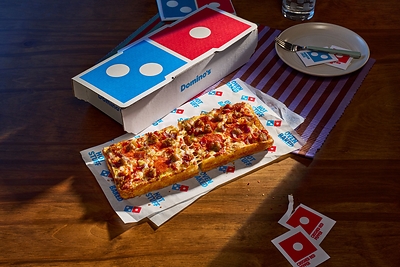
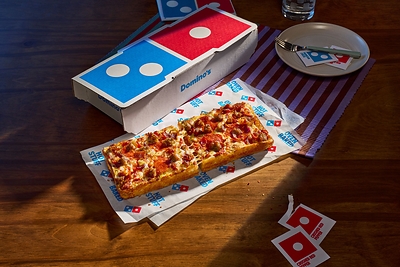
Domino's is introducing the Domino: a Detroit-style pizza made for one, which will launch in stores nationwide on Aug. 31.

After More Than 65 Years, Domino’s® to Launch the First Pizza Worthy of Its Name: Introducing the Domino™

PR Newswire

New Detroit-style pizza made for one to roll out in stores nationwide on Aug. 31

Highlights:

  • The Domino does what traditional pizza can’t; now everyone can enjoy their own pizza, with the toppings they want, without having to sacrifice when sharing a meal with friends and family.
  • In independent testing, the Domino was rated as one of the most delicious products Domino’s has ever introduced.

ANN ARBOR, Mich., Aug. 11, 2026 /PRNewswire-HISPANIC PR WIRE/ — After more than 65 years, Domino’s Pizza Inc. (Nasdaq: DPZ) is introducing the first pizza worthy of its name: the Domino. Launching nationwide on Aug. 31, the new Detroit-style pizza made for one delivers the demands of today’s modern pizza occasion, providing customization without compromise. Now everyone can enjoy their own pizza, with the toppings they want. Sharing a meal no longer means having to share a pizza.

Domino's is introducing the Domino: a Detroit-style pizza made for one, which will launch in stores nationwide on Aug. 31.

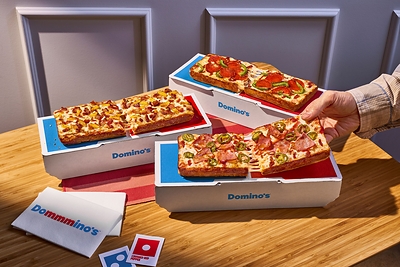
The Domino is shaped just like the brand’s iconic logo and cut into two generous slices. It is handmade with premium, buttery-flavored pan dough encrusted with real Parmesan cheese and baked in a rectangular pan to create a crispy Parmesan Detroit-style crust. It is topped with two layers of cheese, customers’ choice of sauce and up to three toppings, and finished with a drizzle of Domino’s signature garlic seasoning.

“The Domino fills a gap in our portfolio,” said Joe Jordan, chief operating officer and president of Domino’s U.S., and incoming CEO. “When everyone wants something different, traditional pizza falls short. The Domino lets every person build the exact pizza they want. It’s fitting that the next generation in pizza is shaped like the logo of the No. 1 pizza company in the world. The Domino is so mouthwatering that we gave it our name!”

In independent testing, consumers who tried the Domino rated it as one of the most delicious products Domino’s has ever introduced. The Domino fills a consumer need that traditional pizza can’t, as it’s more customizable, portable and convenient. Where traditional pizza doesn’t feed the need, the Domino comes in – from lunch on the go, to late-night snacks, to family pizza night where everyone wants something different.

Customers can enjoy Domino’s newest pizza through the brand’s Mix and Match Deal: Choose any two or more menu items, including a two-topping Domino, for $6.99 each*. To find the nearest store and place an order, visit dominos.com or download Domino’s mobile app.

*Prices higher for some locations.

About Domino’s Pizza®
Founded in 1960, Domino’s Pizza is the largest pizza company in the world, with a significant business in both delivery and carryout. It ranks among the world’s top public restaurant brands with a global enterprise of more than 22,500 stores in over 90 markets. Domino’s had global retail sales of over $20.6 billion in the trailing four quarters ended June 14, 2026. Its system is comprised of independent franchise owners who accounted for 99% of Domino’s stores as of the end of the second quarter of 2026. In the U.S., Domino’s generated more than 85% of U.S. retail sales in 2025 via digital channels and has developed many innovative ordering platforms.

Order – dominos.com
Company Info – biz.dominos.com
Media Assets – media.dominos.com


The Domino is made with premium, buttery-flavored pan dough encrusted with real Parmesan cheese and baked in a rectangular pan to create a crispy Parmesan Detroit-style crust. It is topped with two layers of cheese, customers' choice of sauce and up to three toppings, and finished with a drizzle of Domino's signature garlic seasoning.

Domino's is keeping its same iconic logo that customers know and love, but the brand is updating its colors to more vibrant shades of blue and red.

SOURCE Domino’s Pizza

(Español) Nueva encuesta: La mayoría de los padres considera las políticas sobre inteligencia artificial al elegir una escuela para sus hijos

0
National School Choice Awareness Foundation Logo

Sorry, this entry is only available in Español.

March of Dimes report reveals persistent gaps in access to maternity care as recent healthcare changes threaten an already fragile system

0
March of Dimes Foundation Logo

March of Dimes report reveals persistent gaps in access to maternity care as recent healthcare changes threaten an already fragile system

PR Newswire

New report finds one in three U.S. counties remain maternity care deserts; nearly 100 hospital labor and delivery unit closures recorded since 2024 

ARLINGTON, Va., Aug. 11, 2026 /PRNewswire-HISPANIC PR WIRE/ — Today, March of Dimes, the nation’s leading nonprofit fighting for the health of all moms and babies, released “Nowhere to Go: Maternity Care Deserts Across the U.S.” (2026 report), highlighting how millions of Americans continue to struggle with access to care. The report also analyzes recent hospital closures, noting how these closures and policy changes further threaten an already fragile system that is failing too many women and babies.

March of Dimes Foundation Logo

Maternity care deserts are counties with no obstetric clinicians or birthing facilities, requiring women to travel farther for maternal care. In fact, women living in maternity care deserts travel about three times farther, on average, to access labor and delivery services than those in counties with full access. These increased travel distances are associated with delayed entry into prenatal care, a greater likelihood of unplanned out-of-hospital deliveries, higher rates of maternal morbidity, and increased neonatal intensive care unit (NICU) admissions. Longer travel time also create significant indirect costs for families, including transportation, childcare, missed work, and temporary lodging.

“Across the country, families continue to face unnecessary barriers to maternity care with shifting healthcare and policy decisions threatening to widen gaps and weaken essential services,” said Cindy Rahman, President and CEO, March of Dimes. “Now is the time to reimagine what maternity care can and should be by building a system that creates healthier beginnings, stronger communities, and better outcomes for generations to come. March of Dimes remains committed to that transformation, and by working together, we can build a future where every family has access to the care they need.”

Key findings from the 2026 report:

  • Similar to the 2024 report, 34.6% of U.S. counties are maternity care deserts, home to 2.4 million women of reproductive age and where 149,000 infants are born each year.
  • An additional 3.4 million women and 209,000 infants live in counties with low or moderate access to maternity care.
  • More than half of U.S. counties lack a hospital with labor and delivery services, affecting nearly 370,000 births annually.
  • Obstetric clinician shortages are more severe in rural areas, where nearly 58% of counties lack obstetric clinicians, compared with about 19% of urban counties.
  • From January 2024 to May 2026, at least 96 publicly reported labor and delivery unit closures were identified across 35 states
    • In nearly 60% of affected counties, the closed unit was the only local birthing facility.
    • Recent closures increased travel times by an average of 25 minutes in affected communities.
  • About 1 in 9 women of reproductive age are uninsured nationally, with the highest rates in the South, rural areas, and maternity care deserts.
    • Since the passing of the Affordable Care Act in 2010, uninsured rates among women ages 19 to 54 decreased 45% nationally, but to a lesser extent (just 35%) in states that have not expanded Medicaid.

“This year’s report is a stark reminder that maternity care deserts don’t happen by chance but are the result of deliberate policy choices that have left too many families without access to essential care,” said Dr. Michael Warren, Chief Medical and Health Officer, March of Dimes. “The health of moms and babies depends on the strength of the systems that support them, and that system is currently failing us. However, the solutions are within reach, and they require coordinated action from healthcare providers, policymakers, employers, and communities. We cannot solve this crisis alone.”

Solutions that can drive progress:
Improving access to maternity care requires coordinated action to advance evidence-based solutions that help ensure every family has access to the care they need, regardless of where they live. March of Dimes will continue to lead this work, pursuing a coordinated strategy across advocacy, education, innovation, and community collaborations, including:

  • Fighting for federal and state legislation that protects and expands access
    It is imperative to address how recent and proposed policy changes threaten to reverse progress made by policies that have expanded insurance coverage, such as Medicaid expansion and postpartum Medicaid extension. Another key opportunity to improve access for rural communities, often the most affected by limited access to care, is through the Rural Obstetrics Readiness Act, which was recently reintroduced in Congress. This bill would support training for healthcare providers to provide care during obstetric emergencies during pregnancy, labor and delivery, and in the postpartum period.
  • Bridging care for moms through mobile health centers
    March of Dimes Mom & Baby Mobile Health Centers® bring maternity care directly into communities with limited or no local access. Seven units are currently operating across the U.S., including Columbus and Southeast Ohio; Houston, Texas; New York, New York; Phoenix and Tucson, Arizona; and Washington, D.C., with four additional units coming soon to Central Alabama; Chicago, Illinois; Cleveland, Ohio, and Northern Arizona.
  • Expanding access to doulas for community birth support
    March of Dimes is also working to increase equitable access to doula services through a five-year initiative with CVS Health Foundation, growing and diversifying the doula workforce, strengthening partnerships between community-based doulas and health systems, and providing educational resources for consumers and providers. March of Dimes also has local community programs, such as the March of Dimes Collective Impact Initiative in Greater Houston, which offers multi-day training, professional development, and a compensated practicum providing hands-on birth experience for doulas.
  • Bringing innovation to communities through efforts like guaranteed income programs
    March of Dimes recognizes that social determinants of health, including food security, housing stability, transportation, and interpersonal safety, directly shape outcomes for mothers and babies. Guaranteed basic income pilot programs in New Orleans, Atlanta, and Michigan are demonstrating that direct financial support improves access to prenatal and postpartum care and strengthens the financial and emotional well-being of participating families.

Learn more about the findings, explore county-level data, and take action to improve maternity care access at marchofdimes.org/mcdr. This year’s report was sponsored by Ob Hospitalist Group (OBHG), the nation’s largest employer of maternal health clinicians, including OB-GYNs and certified-nurse midwives (CNMs), working closely with hospitals and community clinicians to provide comprehensive maternal health solutions.

About March of Dimes
March of Dimes leads the fight for the health of all moms and babies. We support research, education, and advocacy, and provide programs and services so that every family can get the best possible start. Since 1938, we’ve built a successful legacy to support every pregnant person and every family. Visit marchofdimes.org or nacersano.org for more information.

About Nowhere to Go: Maternity Care Deserts Across the U.S.
March of Dimes publishes “Nowhere to Go: Maternity Care Deserts Across the U.S.” every two years as the organization’s most comprehensive and current assessment of maternity care access in the United States. Using county-level analyses of obstetric clinicians, birthing facilities, insurance coverage, and travel burden, the report highlights national trends, identifies the populations most affected, and examines how workforce shortages, hospital closures, and policy changes are reshaping the maternity care landscape. Its findings can inform program planning, resource allocation, advocacy, and future research.

SOURCE March of Dimes

Plymouth Township Meijer Supercenter Opening on September 30

0
Meijer is a Grand Rapids, Mich.-based retailer that operates 241 supercenters throughout Michigan, Ohio, Indiana, Illinois, Kentucky and Wisconsin. A privately-owned and family-operated company since 1934, Meijer pioneered the “one-stop shopping” concept and has evolved through the years to include expanded fresh produce and meat departments, as well as pharmacies, comprehensive apparel departments, pet departments, garden centers, toys and electronics.

Plymouth Township Meijer Supercenter Opening on September 30

PR Newswire

New location will be the family-owned retailer’s 130th store in Michigan

PLYMOUTH TOWNSHIP, Mich., Aug. 10, 2026 /PRNewswire-HISPANIC PR WIRE/ — Meijer announced today it will open its new supercenter in Plymouth Township on Sept. 30, increasing the retailer’s store count in Michigan to 130. The new 159,000 square-foot supercenter is located at 48025 5 Mile Rd.

Meijer is a Grand Rapids, Mich.-based retailer that operates 241 supercenters throughout Michigan, Ohio, Indiana, Illinois, Kentucky and Wisconsin. A privately-owned and family-operated company since 1934, Meijer pioneered the “one-stop shopping” concept and has evolved through the years to include expanded fresh produce and meat departments, as well as pharmacies, comprehensive apparel departments, pet departments, garden centers, toys and electronics.

The store will feature a wide assortment of fresh produce and grocery staples at a value that Michiganders know and love, including bakery, meat, seafood and deli departments, a floral area, garden center, apparel and home goods sections. The supercenter will also include a full-service pharmacy with a drive-through option, health and beauty care section, an expansive pet department, electronics, toys and sporting goods. More details about the store will be shared closer to its grand opening. 

A Meijer Express fuel station will open adjacent to the store on September 2, for quick stops, beverages and snacks or prepared food on the go. Meijer customers enjoy earning rewards through the retailer’s mPerks loyalty program, which can be used to save on groceries or to earn up to a $1 off per gallon of gas at Meijer Express stations. Signing up is free and easy at meijer.com/mperks or through the free Meijer app.

“The value and convenience provided by our Meijer supercenters is unmatched, and we’re excited to bring that to customers in Plymouth Township looking for a one-stop shop,” said Maureen Mitchell, Vice President of the Southeast Michigan Region for Meijer. “We’re deeply invested in this area and look forward to strengthening existing partnerships and creating new ones here with local organizations.”

The new store will also feature the retailer’s popular savings and digital shopping tools, including mPerks, Shop & Scan, Meijer Home Delivery and Pickup, giving customers the flexibility to shop when and how it’s most convenient for them.

Customers familiar with the retailer’s brands will be excited to see that the new Plymouth Meijer store will offer many of their favorite Meijer brands, including Frederik’s by Meijer and True Goodness. These exclusive labels offer store brand value combined with high-quality product offerings unique to the retailer. Frederik’s by Meijer, the retailer’s premium brand, delivers authentic and innovative flavors in the spirit of its namesake, Fred Meijer, across dozens of product lines. True Goodness offers consciously crafted products free from more than 100 ingredients, making good choices more affordable and accessible.

There are still hourly, part-time, and full-time job opportunities available at the Plymouth Meijer store. Ideal candidates should possess a desire to grow as part of the Meijer team and provide outstanding customer service. Those interested can apply online at jobs.meijer.com/stores.

Thanks to the support of its customers, Meijer has become deeply rooted in Michigan life. The retailer employs more than 40,000 team members statewide and remains committed to supporting the causes, events, and organizations that matter most to Michiganders. In Southeast Michigan, this includes partnering with Gleaners Food Bank of Southeastern Michigan to fight hunger, supporting community landmarks such as the Detroit Zoo and The Henry Ford Museum & Greenfield Village, and collaborating with local fan favorites, including the Detroit Grand Prix, Detroit Lions, Detroit Tigers, and Detroit Red Wings.

About Meijer: Meijer is a privately owned, family-operated retailer that serves customers at more than 500 supercenters, grocery stores, neighborhood markets, and express locations throughout the Midwest. As the pioneer of the one-stop shopping concept, more than 70,000 Meijer team members work hard to deliver a friendly, seamless in-store and online shopping experience featuring an assortment of fresh foods, high-quality apparel, household essentials, and health and wellness products and services. Meijer is consistently recognized as a Great Place to Work and annually donates at least 6 percent of its profit to strengthen its communities. Additional information on the company can be found by visiting newsroom.meijer.com.

SOURCE Meijer

Blue Shield of California Appoints Healthcare Innovation Leader Kedar S. Mate, MD, to Board of Directors

0
Blue Shield of California Appoints Healthcare Innovation Leader Kedar S. Mate, MD, to Board of Directors

Blue Shield of California Appoints Healthcare Innovation Leader Kedar S. Mate, MD, to Board of Directors

PR Newswire

OAKLAND, Calif., Aug. 10, 2026 /PRNewswire-HISPANIC PR WIRE/ — Blue Shield of California today announced the appointment of Kedar S. Mate, MD, a physician, healthcare quality leader, and chief medical officer of Qualified Health AI, to the nonprofit health plan’s Board of Directors. Dr. Mate brings more than two decades of experience advancing healthcare quality, patient safety, innovation, and health system transformation in the United States and around the world.

Blue Shield of California Appoints Healthcare Innovation Leader Kedar S. Mate, MD, to Board of Directors

Dr. Mate leads the clinical vision and strategy for Qualified Health AI, a digital health company focused on helping healthcare organizations safely and effectively deploy artificial intelligence technologies. Prior to founding the company, he served as president and CEO of Institute for Healthcare Improvement, the world’s leading international healthcare quality and patient safety organization.

“Kedar has spent his career helping healthcare organizations deliver better outcomes for the people they serve,” said Pamela DeCoste, Board Chair for Blue Shield of California. “His experience as a physician, healthcare executive, and innovator will bring valuable perspective as Blue Shield continues working to make healthcare more affordable, accessible, and worthy of our family and friends.”

Dr. Mate’s experience advancing equity, healthcare quality, safety, and affordability through leadership roles spans healthcare delivery, policy, innovation, and technology. He has advised leading healthcare organizations, government agencies, and global institutions, including the World Health Organization and Centers for Medicare & Medicaid Services. Dr. Mate also brings extensive governance experience through board and advisory service with organizations including MLK Community Health System, Healthcare Excellence Canada, Center for Care Innovations, and the National Academy of Medicine’s Artificial Intelligence Code of Conduct initiative.

“Blue Shield of California has long been a leader in pursuing better health outcomes and a more affordable healthcare system for its members,” Dr. Mate said. “I’m thrilled to join the Board of Directors and look forward to supporting the nonprofit organization’s mission and commitment to providing access to quality healthcare that’s sustainably affordable for all.”

Dr. Mate is a senior scholar at Stanford University’s Clinical Excellence Research Center. He practices internal medicine at New York Presbyterian Hospital and serves on the faculty of Weill Cornell Medicine. He earned a Doctor of Medicine degree from Harvard Medical School and a bachelor’s degree in American history from Brown University.

About Blue Shield of California

Blue Shield of California strives to create a healthcare system worthy of its family and friends that is sustainably affordable. The health plan is a taxpaying, nonprofit, independent member of the Blue Shield Association with nearly 6 million members, 6,800 employees, and more than $28 billion in annual revenue. Founded in 1939 in San Francisco and now headquartered in Oakland, Blue Shield of California and its affiliates provide health, dental, vision, Medicaid, and Medicare healthcare service plans in California. The company has contributed more than $60 million to the Blue Shield of California Foundation in the last three years to have an impact on California communities. For more news about Blue Shield of California, please visit news.blueshieldca.com. Or follow us on LinkedIn or Facebook.

Media contact:

Mark Seelig

[email protected]

(510) 607-2359


Blue Shield of California Logo


SOURCE Blue Shield of California

Brayton Purcell LLP Releases The Best of From Dust to Verdict: Season 1, Part 1

0
The Best of From Dust to Verdict: Season 1, Part 1, is a compilation episode featuring key excerpts from episodes one through five of the podcast, From Dust to Verdict.

Brayton Purcell LLP Releases The Best of From Dust to Verdict: Season 1, Part 1

PR Newswire

New compilation episode brings together key excerpts from the first five episodes of the firm’s artificial stone silicosis podcast

NOVATO, Calif., Aug. 10, 2026 /PRNewswire-HISPANIC PR WIRE/ — Brayton Purcell LLP announces the release of The Best of From Dust to Verdict: Season 1, Part 1, a compilation episode featuring key excerpts from episodes one through five of the firm’s podcast, From Dust to Verdict. Hosted by James Nevin, a partner at Brayton Purcell LLP, the episode provides listeners with a clear and accessible overview of the growing occupational health crisis involving accelerated silicosis among artificial stone countertop fabrication workers.

The Best of From Dust to Verdict: Season 1, Part 1, is a compilation episode featuring key excerpts from episodes one through five of the podcast, From Dust to Verdict.

From Dust to Verdict is dedicated to examining the epidemic of accelerated silicosis in artificial stone countertop fabrication workers, along with the medical, scientific, public health, and legal issues connected to the disease. In this compilation episode, James Nevin introduces listeners to the central themes of the early season, including what artificial stone is, how it differs from natural stone, how fabrication activities can expose workers to respirable crystalline silica, how silicosis affects the lungs, and why the disease can progress rapidly in workers exposed to artificial stone dust.

“Artificial stone may look like natural stone, but the podcast explains why the materials are not the same from a worker’s health perspective,” said Nevin. “This compilation episode brings together important excerpts from the first five episodes so that workers, families, medical providers, advocates, and the public can better understand the issues surrounding artificial stone silicosis.”

Artificial stone, also referred to as quartz or engineered stone, is commonly used for kitchen and bathroom countertops. As explained in the episode, crystalline silica artificial stone contains at least 90 percent crystalline silica, while many natural stone products contain significantly lower silica levels. The episode also discusses how the silica in artificial stone is intentionally crushed and pulverized to nano-sized particles before being combined with heavy metals, coloring agents, and other toxic compounds.

Before artificial stone can be installed as a countertop, it must be fabricated. The episode explains that fabrication activities such as cutting, grinding, drilling, polishing, and shaping stone slabs release respirable crystalline silica into the air. The podcast discusses scientific literature and public health findings indicating that artificial stone releases dangerous levels of dust even when wet methods, personal protective equipment, and other dust control measures are used.

The episode also describes why artificial stone presents different concerns than natural stone. According to the podcast, the hazard is not limited to silica content alone. Rather, the episode discusses three related factors: the extremely high silica content of many artificial stone slabs, the nano-sized nature of the silica particles, and the presence of additional toxins and carcinogens within the material. Together, these characteristics help explain why artificial stone fabrication has been associated with accelerated silicosis in workers around the world.

The Best of From Dust to Verdict: Season 1, Part 1 also explains how silicosis affects the lungs. The episode describes the role of the alveolar air sacs, where oxygen passes into the bloodstream and carbon dioxide leaves the body. When respirable crystalline silica is inhaled, the lungs develop scarring that interferes with normal breathing. The compilation outlines the differences between lymph node silicosis, simple silicosis, complicated silicosis, accelerated silicosis, and acute silicosis, including why artificial stone workers may experience disease progression in months or years rather than decades.

The episode further addresses the limitations of available medical responses. Oxygen therapy may help increase oxygen delivery to functioning areas of the lungs, but the podcast explains that oxygen therapy is not a cure for silicosis. Lung transplantation is also discussed as a limited and complex intervention requiring donor availability, medical eligibility, major surgery, extensive recovery, long-term medications, and ongoing medical monitoring.

In addition to silicosis, the compilation discusses other diseases and conditions associated with respirable crystalline silica exposure, including lung cancer, chronic obstructive pulmonary disease (COPD), chronic kidney disease, autoimmune diseases, sarcoidosis, tuberculosis, and other lung infections. The episode also addresses the potential for misdiagnosis, including situations where silicosis may be mistaken for pneumonia, tuberculosis, or sarcoidosis.

A major focus of the compilation is the hierarchy of controls; a framework used in occupational health to evaluate methods of reducing hazardous exposures. The episode explains that elimination and substitution are considered more protective than engineering controls, administrative controls, and personal protective equipment. In the context of artificial stone, the episode discusses why replacing or removing highly hazardous materials offers stronger protection than relying on wet cutting, ventilation systems, respirators, or other protective equipment.

The episode also examines the practical limitations of respiratory protection. The compilation discusses N95 masks, cartridge respirators, P100 filters, fit testing, filter replacement schedules, powered air-purifying respirators, and other protective measures that may be used during fabrication activities. The podcast explains that proper selection, fit, maintenance, and use are all essential considerations when evaluating respiratory protection. Regardless of PPE and engineering controls being used, the podcast points to over 100 peer-reviewed studies indicating that artificial stone cannot be safely fabricated by human beings.

Throughout the episode, James Nevin draws on scientific literature, governmental health authority findings, public health data, and international reports to explain why artificial stone silicosis has emerged as a significant occupational health issue in the United States and abroad. The compilation reviews research concerning silica exposure, disease prevalence, medical outcomes, and the unique characteristics of artificial stone dust.

The episode also discusses litigation involving artificial stone slab manufacturers and suppliers, including allegations concerning product hazards and worker disease. The podcast notes that such allegations are disputed by manufacturers and suppliers. The series presents investigative commentary intended to encourage informed discussion about issues of public health, accountability, transparency, and occupational disease.

The Best of From Dust to Verdict: Season 1, Part 1 is intended to serve as an educational resource for workers, families, attorneys, healthcare providers, public health advocates, and members of the public seeking to better understand artificial stone silicosis. By bringing together key excerpts from the first five episodes, the compilation provides listeners with a concise foundation for understanding the medical science, workplace exposure issues, public health concerns, and legal questions that define the artificial stone silicosis crisis.

The episode is available now through From Dust to Verdict.

About From Dust to Verdict

From Dust to Verdict is a podcast from Brayton Purcell LLP dedicated to examining the epidemic of accelerated silicosis among artificial stone countertop fabrication workers. Hosted by James Nevin, a partner at Brayton Purcell LLP, the series explores medical, scientific, public health, and legal issues related to artificial stone silicosis and associated litigation.

About Brayton Purcell LLP

Brayton Purcell LLP is an accomplished California law firm with a long history of representing individuals and families affected by serious occupational and environmental diseases, including mesothelioma, asbestos-related disease, and artificial stone silicosis. The firm is committed to helping clients understand their legal rights and pursue accountability through the civil justice system.

Media Contact

Brayton Purcell LLP

Nolan Lowry
(415) 399-3107
[email protected]
www.braytonlaw.com

Brayton Purcell, LLP--Attorneys Helping People
Providing excellent service to our clients is the highest goal of Brayton Purcell LLP. We pledge to work ceaselessly on your behalf, providing exceptional advocacy and unparalleled responsiveness. The compassion for and dedication to our clients can be witnessed both in and out of the courtroom.
With compassion, dedication and a fierce pursuit of justice, we have secured record rulings for victims of diseases caused by the failure of manufacturers.

SOURCE Brayton Purcell LLP