
Page 2192

Brazilian Biodiversity Leader and Benson Hill Expand Partnership to Advance Crop Breeding

0
Embrapa will Leverage and Enrich Benson Hill’s CropOS™ Platform to Accelerate Crop Improvement Across South America

ST. LOUIS and BRASILIA, Brazil, May 22, 2019 /PRNewswire-HISPANIC PR WIRE/ — Benson Hill Biosystems, a crop improvement company unlocking the natural diversity of plants, and Embrapa, one of the world’s largest plant biodiversity and crop science research institutions, are extending their partnership to accelerate Embrapa’s breeding program and enrich Benson Hill’s CropOS™ crop development technology.

Embrapa will Leverage and Enrich Benson Hill’s CropOS™ Platform to Accelerate Crop Improvement Across South America

Under the new agreement, Embrapa will leverage CropOS™ to breed improved varieties of soybeans, maize, sorghum and other crops. Embrapa will also contribute its rich sets of crop-related data, enabling Benson Hill to further refine CropOS™.

“We are eager to expand our relationship with Benson Hill and use CropOS to advance breeding for farmers across Latin America,” said Cleber Soares, executive director for Innovation and Technology of Embrapa. “Our work together has demonstrated their commitment to collaboration and appreciation for the power of genetic diversity to help solve big global challenges in a sustainable way.”

Embrapa first partnered with Benson Hill in 2017 to access the company’s genome editing CRISPR nucleases. The new agreement expands to Breed, powered by CropOS, in which Embrapa will access Benson Hill’s AI-driven computational platform for predictive breeding capability and further enhance the platform with its rich data sets.

“The synergy of our technology platform and Embrapa’s research pipeline and data will enable both organizations to accelerate their efforts to improve crops,” said Matthew Crisp, CEO and co-founder of Benson Hill. “Given Embrapa’s work with seed companies across and well beyond Brazil, the impact of this partnership will be extraordinarily far-reaching. We are thrilled to expand our work together.”

Embrapa is a research, development and innovation corporation under the Brazilian Government committed to the advancement of a healthy food supply and conservation of natural biodiversity. Embrapa’s 2,500 researchers apply scientific knowledge and techniques to improve the productivity, nutrition, and sustainability of more than 20 crop species. Brazil represents 20% of the natural diversity on the planet.

Benson Hill’s CropOS™ brings together machine learning, big data analytics and biological knowledge to help plant researchers predict and control outcomes. It allows researchers to quickly predict, select and control desirable traits to bring crop and ingredient improvements to market faster.

About Embrapa

The Brazilian Agricultural Research Corporation (Embrapa) was founded on April 26, 1973 and is under the aegis of the Brazilian Ministry of Agriculture, Livestock, and Food Supply. Embrapa is a technological innovation enterprise focused on generating knowledge and technology for Brazilian agriculture. Since its foundation, and with partners from the National Agricultural Research System, Embrapa have taken on the challenge to develop a genuinely Brazilian model of tropical agriculture and livestock to overcome the barriers that limited the production of food, fiber, and fuel in the country.  This effort has helped to change Brazil. Nowadays, Brazilian agriculture is one of the most efficient and sustainable ones in the planet. Brazil has incorporated a wide area of formerly degraded Cerrado lands into production systems; a region that now accounts for nearly 50% of Brazilian grain production.  Brazil has quadrupled the beef and pork supply and increased the chicken supply 22-fold. These are some of the achievements that took the country from the condition of basic food importer to one of the world’s largest food producers and exporters.

About Benson Hill Biosystems

Benson Hill empowers innovators with a revolutionary crop design platform to develop healthier and more sustainable food and ingredients. Our CropOS™ platform combines machine learning and big data with genome editing and plant biology to drastically accelerate and simplify the product development process. More information can be found online at www.bensonhillbio.com. Follow us on Twitter at @BensonHillBio.

Benson Hill Biosystems, Inc.

Photo – https://mma.prnewswire.com/media/890675/soja4.jpg
Logo – https://mma.prnewswire.com/media/554705/Benson_Hill_Biosystems_Logo.jpg

SOURCE Benson Hill Biosystems

Chase and Visa Provide an Easier Way to Get Around New York City with a Tap

0

NEW YORK, May 22, 2019 /PRNewswire-HISPANIC PR WIRE/ — Chase customers can soon benefit from an easier way to get around town by tapping their Visa contactless cards to ride New York City’s subways and buses, removing the need to stand in line to purchase or load a separate transit card.

Experience the interactive Multichannel News Release here: https://www.multivu.com/players/English/8542651-visa-chase-tap-to-ride-nyc/

Taking public transportation to get to and from work, school or home is a critical part of daily life but can often lead to friction for riders. More than two-thirds (67%) of riders have missed a train while waiting in line to reload a transit card, according to a recent Visa survey of more than 1,000 New Yorkers who take public transportation. Eight out of ten (83%) people surveyed said they have had trouble getting their transit card to work at the turnstile. And two-thirds (66%) have left or forgotten funds on a transit card, at an average of $35.10 lost. Customers can soon simply tap their Chase Visa contactless cards or mobile device at the turnstile to ride the subway or bus. Whether a local or visitor to New York City, the rider experience is the same – fast, easy and secure.

Today, about 20 million Chase customers have Visa contactless credit cards, and contactless debit cards are on track for this summer. That will also include debit cards for Chase Secure Banking customers, a low-cost bank account that opens Chase accounts to even more New Yorkers and public transit riders.

“Customers have been quick to adopt tap to pay and we’ve already seen it exceeding digital wallet use for customers who have contactless cards,” said Abeer Bhatia, president of Card Marketing, Pricing and Innovation at Chase. “Now they will be able to tap to pay for their daily transit needs, and experience how quick and easy it is to checkout thanks to contactless cards.”

Starting May 31, riders can tap to pay and ride at subway stations along the 4/5/6 lines between the Grand Central-42nd St. station and the Atlantic Ave-Barclays Center station, and on all Staten Island buses. Over time, all New York City subway lines and bus routes will accept contactless payments.

“Contactless payments have shaped the way consumers pay all over the world, saving valuable time and delivering a fast, easy and secure way to pay. We are excited to be working with Chase and the MTA to improve New Yorkers’ daily routines with an easier way to not only get around, but also pay for the things they buy every day,” said Dan Sanford, Global Head of Contactless Payments, Visa.

The Chase merchant services team also worked on the creation and implementation of a new payment system to help the MTA accept tap to pay for its new OMNY fare payment system. This allows consumers to use their own tap to pay cards and mobile wallets to travel, providing passengers a speedy experience at the turnstiles. The technology will be available to other transit systems.

The MTA is the first U.S. transit agency to implement contactless payments using Visa’s global transit framework, allowing riders to use any Visa credential – whether it be a Visa contactless card, mobile device or wearable – with the same trust and security as any other payment processed on Visa’s global payment network.

“This is another example of our sustained investment to help New Yorkers move around the city and find new ways of making it easier to get to where they want to go,” said Al Putre, OMNY Program Executive, MTA. “We’re happy Chase Visa customers can benefit from the new OMNY contactless fare payment system right away and look forward to delivering the new technology throughout New York.”

Visa and Chase showcased how riders can tap to ride using Chase Visa contactless cards at The Visa Tap Room, an interactive event featuring a special performance by Liam Payne and appearances by football stars Eli Manning and Sterling Shepard.

Chase customers can learn more and request a new contactless card by visiting TaptoRideNYC.com.

About Visa Inc.

Visa Inc. (NYSE: V) is the world’s leader in digital payments. Our mission is to connect the world through the most innovative, reliable and secure payment network – enabling individuals, businesses and economies to thrive. Our advanced global processing network, VisaNet, provides secure and reliable payments around the world, and is capable of handling more than 65,000 transaction messages a second. The company’s relentless focus on innovation is a catalyst for the rapid growth of connected commerce on any device, and a driving force behind the dream of a cashless future for everyone, everywhere. As the world moves from analog to digital, Visa is applying our brand, products, people, network and scale to reshape the future of commerce. For more information, visit About Visa, Visa Blog and @VisaNews.

About Chase

Chase is the U.S. consumer and commercial banking business of JPMorgan Chase & Co. (NYSE: JPM), a leading global financial services firm with assets of $2.7 trillion and operations worldwide. Chase serves nearly half of America’s households with a broad range of financial services, including personal banking, credit cards, mortgages, auto financing, investment advice, small business loans and payment processing. Customers can choose how and where they want to bank: Nearly 5,000 branches, 16,000 ATMs, mobile, online and by phone. For more information, go to Chase.com.

SOURCE Visa; Chase

Seventy-Five Education Organizations Sign on to AAE Foundation’s Letter On Teacher Diversity

0

ALEXANDRIA, Virginia, May 22, 2019 /PRNewswire-HISPANIC PR WIRE/ — The Association of American Educators Foundation, a 501(c)(3) educational foundation supporting the mission of the Association of American Educators (AAE), a national non-union professional association, has sent a letter signed by more than seventy-five education organizations to Secretary of Education Betsy DeVos and leaders in Congress calling for their help in addressing the lack of teacher diversity in our nation’s classrooms.

The letter, citing federal data and university studies, reports that 53 percent of public school students are children of color, while only 18 percent of teachers identify as a person of color. Studies reveal this disparity causes overall lower student achievement and outcomes, especially in populations of at-risk students and students of color.

The letter states, “We believe that increasing teacher diversity elevates the teaching profession and improves the lives and outcomes of all students,” and calls on all parties involved to play a role in addressing the problem and volunteers the services of the undersigned organizations to help Congress and the Department of Education determine how proposed regulations and legislation may increase or decrease teacher diversity.

“Our teaching population is not reflective of the students they serve, which is no fault of the good women and men in teaching today,” explains Colin Sharkey, Executive Director of AAE and AAE Foundation. “We know this lack of racial diversity can have a devastating effect on the academic achievement of students of color and it means countless persons of color are discouraged from choosing education, which has a negative impact on the profession.”

The United Negro College Fund (UNCF), the nation’s largest and most effective minority education organization, was the first to join the effort. UNCF Vice President of K-12 Advocacy Sekou Biddle, who co-signed the letter with Mr. Sharkey, stated, “UNCF is dedicated to improving outcomes for African-American students to ensure they are well-equipped to enter and succeed in college; and we are committed to working with AAE to develop sound and effective solutions to diversify the teacher workforce.”

Seventy-five education organizations representing teachers, preservice teachers, school counselors, education staff, principals, superintendents, charter school leaders, education reformers, tutors, and teacher educators have signed the letter. The list of signatories includes National Association of Secondary School Principals, National Association of Elementary School Principals, National Network of State Teachers of the Year, National Alliance for Public Charter Schools, Diverse Charter Schools Coalition, Educators Rising, Branch Alliance for Educator Diversity, National Council for the Social Studies, National Association of Special Education Teachers, Organization of American Historians, American Association for Employment in Education, Association of Teacher Educators, American Association of Physics Teachers, Kappa Delta Pi, Thomas B. Fordham Institute, and Educators for Excellence.

Sharkey highlighted the variety of signatories, “That such a broad range of organizations can come together and endorse a single statement reflects the seriousness of the issue and the selfless commitment of the signatories to advocate for what is best for students.”

McKenzie Allen, AAE Foundation’s Director of Advocacy and an educator who taught at schools serving mostly students of color, reflected, “Sixty-five years after the Brown v. Board of Education decision we are still failing to provide an equitable education for all students, especially students of color. We can and must address this problem.”

“We believe the collective effort of these signatories and other organizations committed to this issue will lead to solutions improving pathways for the next generation of educators and addressing issues of morale, training, and support disproportionately impacting teachers of color but too commonplace for all teachers,” added Sharkey.

More information, including the full letter text, list of signatories, articles and studies cited in the letter, is available at aaeteachers.org/diversity.

The Association of American Educators (AAE) is the largest national, non-union, professional educator organization, advancing the profession by offering a modern approach to educator empowerment and advocacy—promoting professionalism, collaboration, and excellence without a partisan agenda. AAE is committed to a teaching profession that is student oriented, well respected, and personally fulfilling. AAE serves members in all fifty states and welcomes professionals from all education entities. Membership is $16.50 per month which includes $2 million professional liability insurance, employment rights coverage, professional resources and many other benefits. Visit aaeteachers.org for more information.

SOURCE Association of American Educators Foundation

FedEx/St. Jude Angels and Stars Gala in Miami raises $800,000 for St. Jude Children’s Research Hospital®

0
Television personalities Rodner Figueroa, Maria Celeste Arraras, Jessica Carillo and Jorge Bernal stop for a photo during the 17th FedEx/St. Jude Angels & Stars Miami Gala

MIAMI, May 20, 2019 /PRNewswire-HISPANIC PR WIRE/ — The 17th annual FedEx/St. Jude Angels and Stars Gala benefiting St. Jude Children’s Research Hospital® united philanthropists, influencers and celebrities who raised $800,000 for the fight to end childhood cancer on Saturday, May 18, at the InterContinental Hotel in downtown Miami. Events like this help ensure families never receive a bill from St. Jude for treatment, travel, housing or food – because all a family should worry about is helping their child live.

Television personalities Rodner Figueroa, Maria Celeste Arraras, Jessica Carillo and Jorge Bernal stop for a photo during the 17th FedEx/St. Jude Angels & Stars Miami Gala

Approximately 600 people attended the celebratory night of artistic expression hosted by television personality Pamela Silva Conde. There was fine dining, both silent and live auctions, and a special performance by GRAMMY Award-winning artist Luis Enrique. DJ Mauricio Parra kept guests on their feet with tunes inspired by the city.

Award-winning broadcast journalist, author, and television personality María Celeste Arrarás, who was named by Newsweek magazine as one of the “20 Most Powerful Women,” was recognized for her commitment to St. Jude patient families.

“I feel deeply honored to be given the opportunity to support St. Jude Children’s Research Hospital,” said Arrarás. “I can’t think of a better mission than opening the doors to children fighting for their lives, regardless of their race, religion or economic position. As a U.S. Hispanic, I was especially moved after learning that four of ten St. Jude patients are of Hispanic origin. Institutions like St. Jude give us hope in humanity. They make us better, and for that I am grateful.”

In addition to Arrarás, Miami-based philanthropist, mother and influencer Tracy Mourning was recognized for her outstanding citizenship to the community.

“I stand before you very clear in my understanding that God has a plan for all of us in every way and I would love to encourage every patient, every parent, every physician, everyone who pours their heart and soul into making St. Jude a place of hope and healing,” said Mourning. “Thank you. I accept this (honor) on behalf of my children, who are my greatest teachers and greatest supporters.”

Among the evening’s notable attendees were television and music personalities, including Giselle Blondet, Poncho de Anda, Alberto Sardiñas, Jorge Bernal, Karla Birbragher, Adriana Martin Carrillo, Roxana García, Sabrina Seara, Luis Alfonso Borrego and Rodner Figueroa.

Gala sponsors included: FedEx Express, AT&T, Cisco Systems, Inc., Pricewaterhouse Coopers, Univision Radio, Accenture, Claro Enterprises, Visa, Carnival Foundation, Morgan Law Group, Anthony Abraham Foundation, Royal Caribbean Cruise Lines, Univista Insurance, Doctor’s Medical Centers, Inc, Tito’s Handmade Vodka, Schneider, Telemundo, Nuage Designs, Casa Diris and The Dream Team Agency.

About St. Jude Children’s Research Hospital®
St. Jude Children’s Research Hospital is leading the way the world understands, treats and defeats childhood cancer and other life-threatening diseases. Its purpose is clear: Finding cures. Saving children.® It is the only National Cancer Institute-designated Comprehensive Cancer Center devoted solely to children. Treatments invented at St. Jude have helped push the overall childhood cancer survival rate from 20 percent to more than 80 percent since the hospital opened more than 50 years ago. St. Jude won’t stop until no child dies from cancer. St. Jude freely shares the discoveries it makes, and every child saved at St. Jude means doctors and scientists worldwide can use that knowledge to save thousands more children. Families never receive a bill from St. Jude for treatment, travel, housing or food – because all a family should worry about is helping their child live. Join the St. Jude mission by visiting stjude.org, sharing stories and videos from St. Jude Inspire, liking St. Jude on Facebook, following St. Jude on Twitter and Instagram and subscribing to its YouTube channel.

Univision's Pamela Silva with St. Jude patients Victoria, Mariangeles and Tina


Univision check presentation with Robert Machen, Alberto Sardiñas, Pamela Silva Conde, St. Jude Patient Victoria, Monica Rabassa, St. Jude Patient Tina, Danny Cruz and Chad Buschell


St. Jude Children's Research Hospital Logo

Photo – https://mma.prnewswire.com/media/890096/Rodner_Figueroa_Maria_Celeste_Arraras_Jessica_Carillo_and_Jorge_Bernal.jpg 
Photo – https://mma.prnewswire.com/media/890098/St_Jude___Pamela_Silva.jpg 
Photo – https://mma.prnewswire.com/media/890100/Univision_check_presentation.jpg 
Logo – https://mma.prnewswire.com/media/613525/St_Jude_Childrens_Research_Hospital_Logo.jpg 

SOURCE ALSAC/St. Jude Children’s Research Hospital

Life Fitness and Smart Fit celebrate partnership to equip 450 gyms in three years

0
Life Fitness - Smart Fit Image 1

SAO PAULO, May 20, 2019 /PRNewswire-HISPANIC PR WIRE/ — Life Fitness will equip 450 Smart Fit gyms by the end of 2021 in the region. With more than 600 units distributed in Brazil, Mexico, Chile, Dominican Republic, Peru, Colombia, Argentina and Ecuador, Smart Fit grew 34% last year, reaching 2 million customers.

Life Fitness - Smart Fit Image 1

For the next three years, the company’s goal is to continue to grow in the region. Among the plans is the purchase of equipment for 600 units, between new facilities and refresh. “In order to continue to grow strongly, we needed a solid and robust company to be our partner in almost every unit of this Latam expansion. With Life Fitness, we have achieved the reliability to go through this process and fulfill our purpose of fitness’ democratization on high standards,” says Thiago Somera, Infrastructure director of the Bio Ritmo Group, of which the Smart Fit network is part.

“Smart Fit is one of our most important customers worldwide and I am sure that both sides will continue to put our best efforts to make this agreement an enduring and evolving partnership,” said Joel Pigott, vice president of Life Fitness for North and Latin America.

Considered as key accounts, the major fitness networks, such as Smart Fit, has a relevant representation on Life Fitness’ revenue. “It is a milestone in our partnership and we are delighted to be part of Bio Ritmo/Smart Fit group expansion, with great impact in the fitness industry in the entire Latin America,” says Pedro Goyn, general director of Life Fitness for Latin America.

About Life Fitness
A world leader in commercial fitness equipment, Life Fitness has for more than 50 years the mission of encouraging people to seek active lives. With its global headquarters in Chicago, Life Fitness manufactures and distributes cardiovascular, strength, group training, rehabilitation, billiard tables and accessories, and gaming furniture in more than 160 countries – in Brazil, it has a subsidiary since 1999 and already has stores in almost the entire country. Since 1968, when Lifecycle, the first electronic product of exercise equipment was invented, Life Fitness is dedicated to creating solutions that benefit both gyms and practitioners. Over the last few decades, concerns and innovations in the world of physical activity have completely changed, and Life Fitness has evolved together. Our family, made up of the brands Hammer Strength, Cybex, Indoor Cycling Group (ICG), SCIFIT and Brunswick Billiards, understands that exercise is an important part of daily routine and the best way to know everything we can about our products and solutions Fitness is utilizing them every day. Helping people live healthier lives is what we do, and devotion to that goal begins with our co-workers. www.lifefitness.com.br

About Smart Fit
With 2 million customers in 10 years of activities, the Smart Fit Fitness Network has 600 units distributed throughout Brazil and Mexico, Chile, Dominican Republic, Peru, Colombia, Argentina and Ecuador. Created with the purpose of democratizing access to the practice of high-level physical activity, it offers accessible plans, with monthly fees starting at R$ 69.90, and facilitated membership. The brand is part of the Bio Ritmo Group, the 4th largest network in units in the last five years and the 5th in the ranking of the brands that most evolved in the same period, according to IHRSA’s 2017 global report. More information at www.smartfit.com.br

Life Fitness - Smart Fit Image 2


Life Fitness - Smart Fit Image 3


Life Fitness

Photo – https://mma.prnewswire.com/media/889509/Smart_Fit_Image_1.jpg
Photo – https://mma.prnewswire.com/media/889511/Smart_Fit_Image_2.jpg
Photo – https://mma.prnewswire.com/media/889510/Smart_Fit_Image_3.jpg
Logo – https://mma.prnewswire.com/media/681824/LF_Logo.jpg  

SOURCE Life Fitness

Adolescent Sports Metrics Announces Free Full Protocol UIL Pre-Participation Evaluations for IRB (research)

0
Adolescent_Sports_Metrics_Logo

DALLAS, May 20, 2019 /PRNewswire-HISPANIC PR WIRE/ — Adolescent Sports Metrics (ASM) is offering free in-office UIL Pre-Participation Physicals for IRB (research) for all student athletes planning to participate in a school sponsored sport activity during the 2019-2020 school year.

The pre-participation physical evaluation is a commonly requested physical for athletes of all ages. The overall goal is to promote the health of athletes and their safe participation in sports. Although studies have not found that the pre-participation physical evaluation prevents morbidity and mortality associated with sports, it can detect conditions that predispose the athlete to injury or illness and can provide ideas to prevent injuries.

ASM’s Full Protocol UIL Pre-Participation Physical for IRB (research) includes all the components of the standard UIL physical with the addition of a detailed concussion evaluation, digital spinal & extremity ROM, strength testing, EKG/ECG and baseline labs. All students that participate are de-identified, meaning none of the data collected can be connected to their identity which completely preserves participant privacy. The Full Protocol Pre-Participation Physical for IRB (research) requires 1 hour to complete and is entirely free when performed in the ASM office. Please visit the ASM website (www.AdolescentSportsMetrics.org) to learn more or schedule an appointment.

About Adolescent Sports Metrics
Adolescent Sports Metrics (ASM) is a 501 (c)(3) nonprofit organization founded in 2017. ASM’s mission is to collect data from young athletes during UIL Pre-Participation Evaluations in order to establish what “normal” looks like in this demographic group. “Normal” data ranges are not currently available for various reasons, primarily because this age group does not see healthcare providers unless ill. As a result, the data collected during sick visits do not improve diagnoses for providers or outcomes for patients. By allowing ASM to serve your children, you allow us to serve everyone’s in the future with better data, for better research and better futures.

Website: www.AdolescentSportsMetrics.org 
Facebook: @ASMetrics
Twitter: @ASportsMetrics

Logo – https://mma.prnewswire.com/media/889049/Adolescent_Sports_Metrics_Logo.jpg

SOURCE Adolescent Sports Metrics

Hot Topics In Deep-Dive Research Sessions At CMC Annual Summit: Microculturalism, Social Media Behavior And Technology Trends

0
AHAA: The Voice of Hispanic Marketing is rebranding as Culture Marketing Council: The Voice of Hispanic Marketing, which will continue to elevate the quality and effectiveness of U.S. marketing by harnessing the power of cultural expertise and impact to drive business results.

FAIRFAX, Virginia, May 20, 2019 /PRNewswire-HISPANIC PR WIRE/ — Brands and multicultural marketing leaders expect business-building research and cultural insights from the Culture Marketing Council: The Voice of Hispanic Marketing (CMC) upon which to base their culture-driven campaigns and grow market share. This year, the CMC will kick off its Annual Summit in Dallas on Monday, June 10, with a series of research deep dives to provide a knowledge framework for subsequent sessions throughout the conference. Kantar, Twitter and GroupM Multicultural tackle the phenomenon of microculturalism, culture-driven social media behaviors, and technology trends impacting effective marketing strategies today.

  • MICROCULTURALISM: UNITY IN UNIQUENESS
    It’s increasingly clear that societal fragmentation is at least partly driven by fragmentation in personal identity. The acceleration of lifestage fluidity, the rising multiracial population, the expanding gender spectrum, and a plethora of other identity markers intersect uniquely for everyone. The emergence of microculturalism is a major test for businesses seeking to understand, reach, and accurately depict consumers. This presentation is designed to help businesses find growth in a singularly uncomfortable place: a marketplace without an “average” consumer. Speaker: Valeria Piaggio, Senior Vice President, Head of Identity & Inclusion Insights, Kantar, Consulting Division
  • HOW MULTICULTURAL AUDIENCES BEHAVE ON TWITTER
    Multicultural audiences are extremely active on Twitter, but how do they behave and what motivates them are questions we’ve begun to answer. Understanding the basics will help to develop content that’s relevant for these audiences. This session will uncover the behaviors of multicultural audiences on Twitter and how to craft shareable Tweets that make them feel recognized and respected. Speaker: Meghann Elrhoul, Head of Global Agency and Multicultural Research at Twitter 
  • KEEPING A PULSE ON THE FUTURE
    Shifts in consumer mindsets and behaviors are transforming the marketplace and impacting society at rapid pace. Through deep analysis, GroupM’s Multicultural Analytics division has identified that micro-audiences and communities are often those leading these changes. In their latest “culturePulse report” you’ll learn how identity is evolving and how trends around technology are taking shape. Speaker: LaToya Christian, Managing Partner, Marketing Strategy & Analytics, GroupM
AHAA: The Voice of Hispanic Marketing is rebranding as Culture Marketing Council: The Voice of Hispanic Marketing, which will continue to elevate the quality and effectiveness of U.S. marketing by harnessing the power of cultural expertise and impact to drive business results.

The CMC Annual Summit features high-caliber content thoughtfully curated by experts rather than sponsorships, breakthrough data and business-building best practices, and networking opportunities with the biggest players in the multicultural marketing industry. The registration fee is all-inclusive with sessions, awards gala, meals and cocktail hours covered. Space is limited so register here!

For more information, visit culturemarketingcouncil.org and follow the CMC on Facebook, Instagram and Twitter at @cmchispanic using the conference hashtag #CultureDriven.

About CMC: Founded in 1996 as the Association of Hispanic Advertising Agencies, the Culture Marketing Council: The Voice of Hispanic Marketing is the national trade organization of all marketing, communications and media firms with trusted Hispanic expertise.

Logo – https://mma.prnewswire.com/media/635930/Culture_Marketing_Council_Logo.jpg

SOURCE Culture Marketing Council: The Voice of Hispanic Marketing

Atlanta Clenches Top Spot on Orkin’s 2019 Mosquito Cities List

0
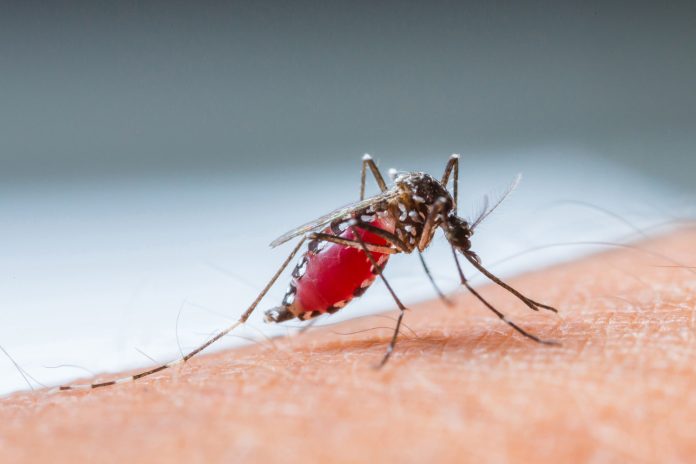
Orkin_Mosquito

Boston and Baltimore leap into the top 15, 11 new cities join the list

ATLANTA, May 20, 2019 /PRNewswire-HISPANIC PR WIRE/ — For the sixth year in a row, the Atlanta area tops pest control leader Orkin’s Top 50 Mosquito Cities list, released today. Second on the list is the New York market, which moved up one spot from last year, followed by the Chicago and Houston-area markets. Boston and Baltimore rose 20 and 27 spots, respectively. Eleven new cities and metro areas were added to the list including Denver; Burlington, New York; Milwaukee; Cincinnati; Greensboro, N.C.; Savannah, Ga.; Jacksonville, Fla.; Baton Rouge; Amarillo, Texas; Madison, Wisc. and Charleston, S.C.

“Mosquitoes are more than annoying; they can be a major health threat,” said Dr. Mark Beavers, Orkin entomologist. “Mosquito-borne diseases such as West Nile virus, encephalitides, dengue, chikungunya and for those who may remember, Zika, threaten the safety of humans and pets.”

Mosquito season starts when spring temperatures arrive, and they are most active when temperatures rise above 80 degrees. Breeding season is usually July through September, while peak West Nile virus season is typically late August through September, and sometimes lasts through October. Mosquito activity usually drops when temperatures dip below 50 degrees Fahrenheit and stops when temperatures drop below freezing (32 degrees Fahrenheit).

Orkin’s Top 50 Mosquito Cities list ranks metro areas by the number of mosquito customers served from April 1, 2018 to March 31, 2019. The list includes both residential and commercial treatments.

1.    Atlanta                       

26.  Tulsa, Okla. (+9)

2.    New York (+1)            

27.  Minneapolis (+5)

3.    Washington, D.C. (+1)  

28.  Albany, New York (-2)

4.    Chicago (+1)                 

29.  Grand Rapids, Mich. (-7)

5.    Houston (+2)                 

30.  Memphis (-18)

6.    Dallas-Ft. Worth, Texas (-4)  

31.  Oklahoma City (+9)

7.    Detroit (+4)                           

32.  New Orleans (-3)

8.    Philadelphia (+9)                   

33.  Cleveland, Ohio (+14)

9.    Charlotte, N.C. (+1)               

34.  Lafayette, La. (-7)

10.  Raleigh-Durham, N.C. (+5)     

35.  Burlington, New York (new to list)

11.  Phoenix (+14)                         

36.  Mobile, Ala. (-15)

12.  Los Angeles (+4)                     

37.  Milwaukee (new to list)

13.  Boston (+20)                           

38.  Austin (-18)

14.  Miami (-6)                              

39.  Knoxville, Tenn. (+7)

15.  Baltimore (+27)                    

40.  Cincinnati (new to list)

16.  Richmond, Va. (+14)           

41.  San Antonio (-5)

17.  Nashville (-4)                      

42.  West Palm Beach, Fla. (+6)

18.  Tampa (-4)                         

43.  Greensboro, N.C. (new to list)

19.  Indianapolis (+5)                 

44.  Hartford, Conn. (-8)

20.  St. Louis (-14)                      

45.  Savannah, Ga. (new to list)

21.  Norfolk, Va. (+2)                   

46.  Jacksonville, Fla. (new to list)

22.  Orlando (-3)                           

47.  Baton Rouge (new to list)

23.  Greenville, S.C. (+8)               

48.  Amarillo, Texas (new to list)

24.  Denver (new to list)                  

49.  Madison, Wisc. (new to list)

25.  Kansas City (-16)                       

50.  Charleston, S.C. (new to list)

With the presence of West Nile virus in the U.S., 2,544 cases in 2018, it remains a concern as there is no treatment, cure or vaccine for the virus. One of the best strategies for eliminating mosquito-borne diseases is to reduce populations of the mosquitoes that spread them.

Below are the most common types of mosquitoes in the U.S.:

  • Culex Mosquitoes: These mosquitoes are seen throughout the United States and can transmit West Nile virus, St. Louis encephalitis and even bird malaria. They are mostly night biters but can also bite at dusk and dawn.
  • Aedes Mosquitoes: These are commonly known as floodwater mosquitoes, and they may live in a variety of habitats ranging from swamps to natural containers such as soda cans and pet water bowls. They can transmit several diseases including dengue, chikungunya, Zika and dog heartworm. Many of these are day-biters with the peak periods in the morning and afternoon.
  • Anopheles Mosquitoes: In addition to spreading malaria, which has been eradicated from the United States but is constantly reintroduced due to infected travelers from foreign countries, Anopheles mosquitoes can transmit dog heartworm as well as a few viruses. They have been found in most states and are most active at night.   

“Male adult mosquitoes feed on plant nectar, while females need a blood meal to support reproduction,” said Beavers. “Reducing items that attract mosquitoes, actively working to prevent them from breeding in their required water habitats, wearing insect repellent or moving inside the home during peak biting times are ways to protect one’s self from mosquito bites.”

After mating, females typically seek a blood meal to aid in egg production. Those eggs are laid in water or just above the edge of the waterline (for example, floodwater mosquitoes). Those water sources may be standing pools or stagnant water but can also be manmade sources such as bird baths, buckets and even mud puddles. Egg numbers vary from species to species but there can be more than 100 eggs in a single laying. And in as a little as four days, a single mosquito can multiply into as many as 400.

Orkin recommends the following tips to help residents protect against mosquitoes: 
Eliminate Mosquito-Friendly Conditions in and Around Your Yard

  • Any object that has the potential to hold water should be removed or cleaned out frequently, as mosquitoes can breed in just an inch of standing water.
  • Clean gutters to avoid rainwater build up. Be sure to check for puddles that form on the roof from rain water, leaking pipes or even condensation from air conditioners.
  • Change the water (at minimum) weekly in bird baths, fountains, potted plants and any containers that hold standing water, including wading pools.
  • Keep swimming pool water treated and circulating.
  • Trim shrubbery, as adult mosquitoes like to rest in dark, protected areas with high humidity, such as under the leaves of lush vegetation.

Prevent Mosquitoes from Biting

  • Wear loose-fitting, long-sleeved shirts and long pants. Mosquitoes can bite through tight clothing.
  • Apply an EPA-registered mosquito repellent containing products such as DEET, picaridin or IR3535.

Eliminate Entry Points

  • Inspect doors and windows for drafts or openings around their perimeters and window air conditioning units. Install weather stripping around doors and utilize caulk around window frames. 
  • Ensure that window and door screens are securely in place and free of holes or tears.
  • Keep doors tightly closed. A propped-open door is a welcome mat for mosquitoes to enter your home.

For more mosquito information and prevention tips, visit Orkin.com.                             

About Orkin, LLC
Founded in 1901, Atlanta-based Orkin is an industry leader in essential pest control services and protection against termite damage, rodents and insects. The company operates more than 400 locations with almost 8,000 employees. Using a proprietary, three-step approach, Orkin provides customized services to approximately 1.7 million homeowners and businesses in the United States, Canada, Mexico, Europe, South America, Central America, the Middle East, the Caribbean, Asia, the Mediterranean and Africa. Orkin is committed to studying pest biology and applying scientifically proven methods. The company collaborates with the Centers for Disease Control and Prevention (CDC) and eight major universities to conduct research and help educate consumers and businesses on pest-related health threats. Learn more about Orkin at Orkin.com. Orkin is a wholly-owned subsidiary of Rollins Inc. (NYSE: ROL). Follow us on Facebook and LinkedIn.

Photo – https://mma.prnewswire.com/media/887825/Orkin_Mosquito.jpg

SOURCE Orkin

CDC’s Eight Tips for Safe and Healthy Summertime Work and Play

0
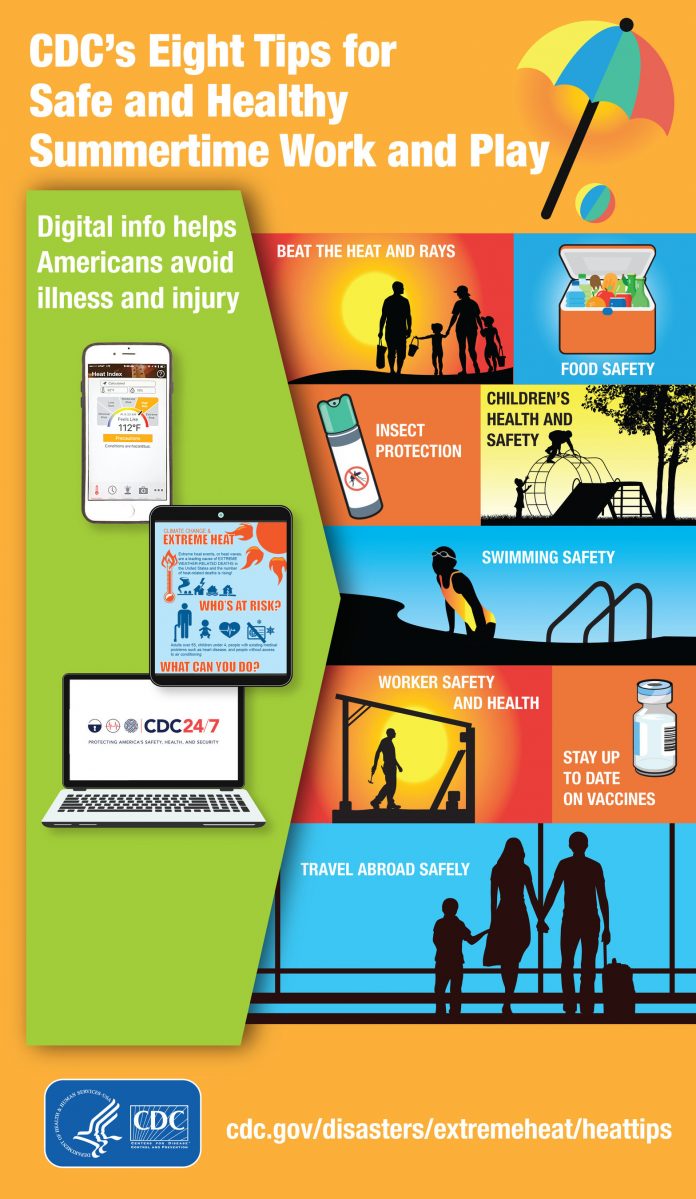
Safe_Healthy_Summer

Digital info helps Americans avoid illness, injury

ATLANTA, May 17, 2019 /PRNewswire-HISPANIC PR WIRE/ — Whether you are planning an overseas vacation, getting ready for a staycation, or will be working outdoors, the Centers for Disease Control and Prevention’s latest health tips, alerts, and social media updates include practical advice for travelers, swimmers, and everyone who wants to beat the summer heat.

“Summer is a great time to travel and enjoy the great outdoors, but it’s important to take simple, common-sense precautions,” said CDC Principal Deputy Director Anne Schuchat, M.D. “From information about travel vaccinations to tips to prevent insect bites, CDC provides resources to help keep you and your loved ones healthy and safe.”

Travel abroad safely

Before traveling abroad, check out health and safety risks at your destination. Animal illnesses and drinking water might be very different from what you’re used to and could make you sick. Get needed vaccinations at least 4 to 6 weeks before you leave to ensure you’re protected by the time you travel.

CDC’s Summer Travel Abroad site has health and safety tips for anyone traveling outside the United States. CDC’s latest traveler’s health updates include information about measles and malaria. Many countries are experiencing measles outbreaks, including Brazil, England, France, Israel, Japan and Ukraine. Check out CDC’s Vaccine Information Statements (VIS) to get the latest information. New anti-malarial medications are available for travelers to parts of the Caribbean, Central and South America, Southeast Asia, and Africa. About 1,700 cases of malaria are diagnosed every year in U.S. travelers who go abroad.  

Swimming safety

Swimming, one of the most popular summer activities for children and adults, gets the spotlight May 20–26, when we observe Healthy and Safe Swimming Week.

This year’s theme, “Pool Chemistry for Healthy and Safe Swimming,” highlights the roles that swimmers, parents of young swimmers, aquatics and beach staff, residential pool owners, and public health officials play in preventing disease outbreaks, drowning, and pool chemical injuries.

CDC recommends that everyone check out the latest inspection score of pools where you plan to swim. Look for inspection scores online or on site. Chemicals like chlorine are added to pool water to kill germs and stop them from spreading, helping to keep swimmers healthy. However, mishandling pool chemicals can cause injuries. Owners and operators of both public and privately owned pools, hot tubs/spas, and water playgrounds can take steps to prevent pool chemical injuries.

Young Worker Safety and Health

Young workers (ages 15–24) have higher rates of job-related injury compared to adult workers. To help keep young workers safe at their summer jobs, CDC’s National Institute for Occupational Safety and Health (NIOSH) is participating in the social media campaign, #MySafeSummerJob, to provide workplace safety and health information and resources to employers of youth, young workers, parents, and educators. My Safe Summer Job is a collaboration between government agencies—including the Occupational Safety and Health Administration (OSHA) and NIOSH—and numerous professional and non-profit organizations, including CareerSafe and the National Safety Council. The campaign is raising awareness about job-related hazards and how to address them, workers’ rights and responsibilities, voicing safety concerns on the job, and injury prevention.

Beat the heat and rays

Heat kills more than 600 people in the United States each year.  Preventing heat-related illnesses, including heat stroke and heat exhaustion, is important for people of all ages, but extreme heat poses the greatest risk for people under age 4 and over 65, and anyone who has a pre-existing medical condition or who lives in a home without air conditioning. The best ways to protect yourself from heat include staying cool, hydrated, and informed: find air-conditioning during hot hours and wear cool clothing, drink plenty of liquids, and pay attention to heat advisories.  NIOSH offers several recommendations and tools that employers can incorporate into trainings, and workers can use in real-time, in order to help stay safe when working in heat.

Sunburn is a common summertime injury. Unprotected skin can be burned by the sun’s UV rays in as little as 15 minutes, but can take up to 12 hours for the skin to show the damage. CDC recommends staying out of the sun between 10 a.m. and 4 p.m., when its UV rays are at their highest level. Sunscreen is recommended for anyone working and playing outside in the summer, even on cloudy days. Hats, sunglasses, and long sleeves are also recommended for outdoors activities.

Children’s health and safety

Summer activities, such as riding a bike and playground time, are great for a child’s development. To keep kids healthy and safe all summer long, be sure children use helmets that fit well while riding their bikes and follow playground safety tips from CDC’s website. Parents should ensure children stay safe while traveling in cars. Children should be properly buckled in a car seat, booster seat, or seat belt —whichever is appropriate for their weight, height, and age — on every trip.  Properly buckling up reduces serious and fatal injuries by up to 80 percent. Children under age 13 are best protected in the back seat.  

Stay up to date on vaccines

Making sure your child is up to date on vaccines is key to protecting them against serious diseases throughout their life. The summer is a great time to make appointments for your child to get recommended vaccines or to catch up on vaccines they might have missed when they were younger. CDC’s recommended immunization schedule is safe and effective at protecting your child from 14 infectious diseases like measles, chickenpox, and rubella.  It’s based on how your child’s immune system responds to vaccines at various ages, and how likely your child is to be exposed to a particular disease. CDC also recommends three vaccines for all 11- to 12-year-old boys and girls to prevent infections that can cause meningitis, HPV cancers, and whooping cough.  More information about how vaccines work, where to find vaccines in your area, and what vaccines your child needs can be found on CDC vaccine website, www.cdc.gov/vaccines.

Food safety

Food poisoning peaks during summer months due to warmer temperatures, which can let foodborne germs thrive. Each year, 1 in 6 Americans get sick from eating contaminated food. CDC also has advice for food safety when grilling.

Insect protection

Protect yourself and your family from insect bites by using Environmental Protection Agency (EPA)-registered insect repellents with active ingredients such as DEET. Apply repellents only to exposed skin or clothing, as directed on the product label and always follow instructions when applying insect repellent to children.

CDC works 24/7 protecting America’s health, safety and security. Whether diseases start at home or abroad, are curable or preventable, chronic or acute, or from human activity or deliberate attack, CDC responds to America’s most pressing health threats. CDC is headquartered in Atlanta and has experts located throughout the United States and the world.

To unsubscribe from this CDC media listserv, please reply to [email protected] with the email address you would like removed

U.S. DEPARTMENT OF HEALTH AND HUMAN SERVICES

Contact: CDC Media Relations
404-639-3286

Centers For Disease Control And Prevention

Photo – https://mma.prnewswire.com/media/888723/Safe_Healthy_Summer.jpg

Logo –

https://mma.prnewswire.com/media/287595/cdc__logo.jpg

SOURCE Centers for Disease Control and Prevention (CDC)

2019 U.N. Correspondents Association Awards For Best Journalistic Coverage Of The United Nations And U.N. Agencies

0
unca_blue_Logo

Winners Will Be Honored At Gala Event By The U.N. Secretary-General H.E. António Guterres Friday, December 6th, 2019 At Cipriani Wall Street, New York.

NEW YORK, May 16, 2019 /PRNewswire-HISPANIC PR WIRE/ — The United Nations Correspondents Association (UNCA) invites media worldwide to submit entries for its 24th annual UNCA Awards for the best print, broadcast (TV & Radio) and online, web-based media coverage of the United Nations, U.N. agencies and field operations.

Deadline for submissions is September 15, 2019

The awards are open to all journalists anywhere in the world.  The Awards are:

  1. The Elizabeth Neuffer Memorial Prize, sponsored by the Alexander Bodini Foundation, for written media (including online media). The prize is for print and online coverage of the U.N. and U.N. agencies, named in honor of Elizabeth Neuffer, The Boston Globe bureau chief at the U.N., who died while on an assignment in Baghdad in 2003.
  2. The Ricardo Ortega Memorial Prize, sponsored by the United Nations Alliance of Civilizations, for broadcast (TV & Radio) media. The prize is for broadcast coverage of the U.N. and U.N. agencies, named in honor of Ricardo Ortega, formerly the New York correspondent for Antena 3 TV of Spain, who died while on an assignment in Haiti in 2004. 
  3. The Prince Albert II of Monaco and UNCA Global Prize for Climate Change. The prize is for print (including online media) and broadcast media (TV & Radio) for coverage of climate change, biodiversity, and water.

IMPORTANT INFORMATION FOR APPLICANTS:

Coverage of the U.N. and U.N. agencies is specified in each category; the committee welcomes coverage of all issues particularly on the Sustainable Development Goals for 2030, peacekeeping operations and nonproliferation, including the elimination of nuclear, chemical and biological weapons.

Work in print, broadcast (TV & Radio) and online coverage must be published between September 2018 and August 2019.

The judges will look for entries with impact, insight and originality, and will consider the courage and investigative and reporting skills of the journalists.  Special attention will be given to the originality of daily coverage and breaking news from U.N. Headquarters. Entries from the developing world media are particularly welcome.

Entries can be submitted in any of the official U.N. languages (English, French, Arabic, Chinese, Spanish, and Russian), however a written transcript in English or French is necessary to facilitate the judging process.

Each candidate can submit to no more than two (2) prize categories, with a maximum of three (3) stories in each. Joint entries are accepted.

Electronic files and web links uploaded to the online Entry Form are required.

HOW TO SUBMIT YOUR ENTRY:

Entries are submitted online by completing the UNCA Awards Entry Form.

On the first page, please complete your personal information and upload your photo.
The following page is where you will submit your work electronically by uploading web links and/or files directly to the Entry Form.

** Electronic entries are mandatory **

All entries must be received by September 15th, 2019 

For Questions regarding UNCA Awards & entries please contact:
The UNCA Office, 1-212-963-7137.
Or send an email to [email protected]  

CLICK ON THE ENTRY FORM BELOW TO GET STARTED: 

ENTRY FORM
http://unca.com/unca-awards-call-for-submissions-form/

UNCA Awards Committee: Valeria Robecco (UNCA President), Giampaolo Pioli (Awards Chairman), ), Jianguo Ma (UNCA Second Vice President), Luke Vargas (UNCA Third Vice President), Seana Magee (UNCA Secretary), Tuyet Nguyen (Awards Selections Coordinator), Sherwin Bryce-Pease (UNCA Executive Member), Maria Khrenova (UNCA Executive Member), Betul Yuruk (UNCA Executive Member).

Logo – https://mma.prnewswire.com/media/888713/unca_blue_Logo.jpg

SOURCE United Nations Correspondents Association